
Discover essential insights on aging alone — from managing loneliness and protecting your health to building a Support Circle that keeps you in control.
TL;DR
Aging alone is not the same thing as being lonely. But for millions of adults over 50, the quiet that comes with growing old alone can feel heavier than expected, especially when there is no built-in support system nearby. The term "solo ager" describes this reality well. It refers to anyone growing older without a spouse, partner, or nearby adult children to step in when life gets complicated. If that sounds like you, or like it might one day, this article covers what the research actually says about the emotional, health, and practical challenges of aging solo, and what you can do about them right now.
For solo agers, elder planning is not just about paperwork. It is about creating a support system before you need one. If there is no spouse, nearby child, or trusted family member ready to step in, every decision becomes more important. The goal is not to prepare for the worst. The goal is to stay independent, maintain control, and make sure your wishes are known.
| Point | Details |
|---|---|
| Loneliness is not the same as living alone | You can live alone without being lonely, but the risk of loneliness rises with age and needs active management. |
| Social isolation carries real health risks | Isolation is linked to higher rates of heart disease, cognitive decline, and anxiety in older adults. |
| Group activities beat solo coping | Face-to-face group programs reduce loneliness far more effectively than online interaction or passive hobbies. |
| Legal planning protects your autonomy | Naming a healthcare proxy and backup decision-maker before a crisis gives you control over your own care. |
| Proactive planning is self-care | Building routines, a Support Circle, and safety plans early is the most powerful thing a solo ager can do. |
| Start before a crisis | Planning before a crisis forces decisions gives you more options, lower costs, and less emotional strain. |
| Review legal documents regularly | Review legal documents every 3 to 5 years to ensure they still reflect your wishes and circumstances. |
| Build a paperwork plan and a people plan | Legal documents matter, but so do the people who will act on them. Cultivate both. |
| Understand Medicare and Medicaid limits | Neither program covers all long-term care costs. Know the gaps before you need to fill them. |
| Organize information in one accessible location | Keep medical, legal, financial, and emergency contact details together where trusted people can find them. |
There is a difference between living alone and feeling lonely. Not everyone who ages solo feels isolated. But the risk is real and growing. Loneliness affects 40% of adults aged 45 and older, and that number has been climbing. That is not a small figure. It means nearly half of people in your age group are carrying a quiet burden that many never talk about.
What makes loneliness in old age particularly complicated is that it does not always arrive suddenly. It tends to build. A friend moves away. A spouse passes. Children get absorbed in their own lives. Slowly, the phone rings less. The calendar empties. And one day, the quiet feels heavier than you expected.
The research draws a clear line between two different experiences: social isolation, which is an objective lack of social contact, and loneliness, which is the subjective feeling of being disconnected. Both matter, but they affect health through distinct but overlapping pathways, and addressing one does not automatically fix the other.
Here is what makes this worse for solo agers specifically:
For a deeper understanding of how solo aging works and what it means to build well-being without a traditional family structure, read our Solo Aging Explained guide. The COVID-19 pandemic showed what can happen when older adults are suddenly cut off from social contact. A 2025 integrative review found lower quality of life among community-dwelling older adults who were living alone during that period. The lesson is not to wait for a crisis to start building connection into your life.
"Loneliness is one of the most significant, and most invisible, health challenges facing older adults today." — from a 2025 review on loneliness and quality of life in older adults
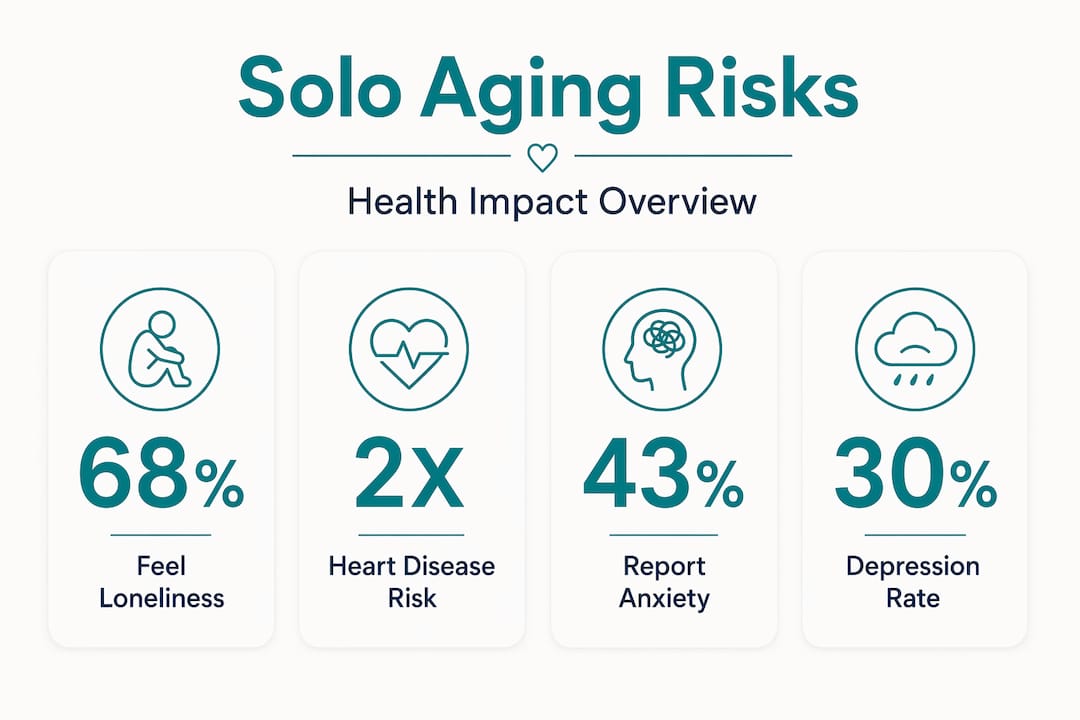
Most people understand that loneliness feels bad. Fewer realize that it is also physically dangerous. The health effects of social isolation and loneliness in older adults are not just emotional. They are measurable and serious.
| Health Risk | How Isolation Contributes |
|---|---|
| Cardiovascular disease | Loneliness raises anxiety and stress hormones that strain the heart |
| Cerebrovascular disease | Reduced social stimulation accelerates vascular cognitive changes |
| Cognitive decline | Lower mental engagement speeds up memory and function loss |
| Depression and anxiety | Persistent loneliness rewires mood regulation over time |
| Unhealthy behaviors | Isolated adults are more likely to skip meals, exercise less, and drink more |
A 2026 BMC Geriatrics study found that loneliness in older adults is directly linked to higher anxiety and unhealthy lifestyles, which in turn raise the risk of heart and brain disease. Loneliness does not just feel bad. It changes behavior, and changed behavior changes physical health.
The good news is that these risks are not inevitable. Staying physically active, eating balanced meals, keeping regular medical appointments, and maintaining social connection all push back meaningfully against this cycle. You do not need to overhaul your entire life. You need steady, consistent habits.
Pro Tip
Combine physical and social activity whenever you can. A walking group, a water aerobics class, or a community garden offers both at once. Research confirms that group exercise programs are more effective at reducing loneliness than solo activity.
To stay active and independent, prioritizing movement that puts you around other people gives you a health return that no amount of solitary exercise can fully replicate.
Consider creating a one-page emergency summary that includes:
Keep a printed copy in your home and another in your vehicle.
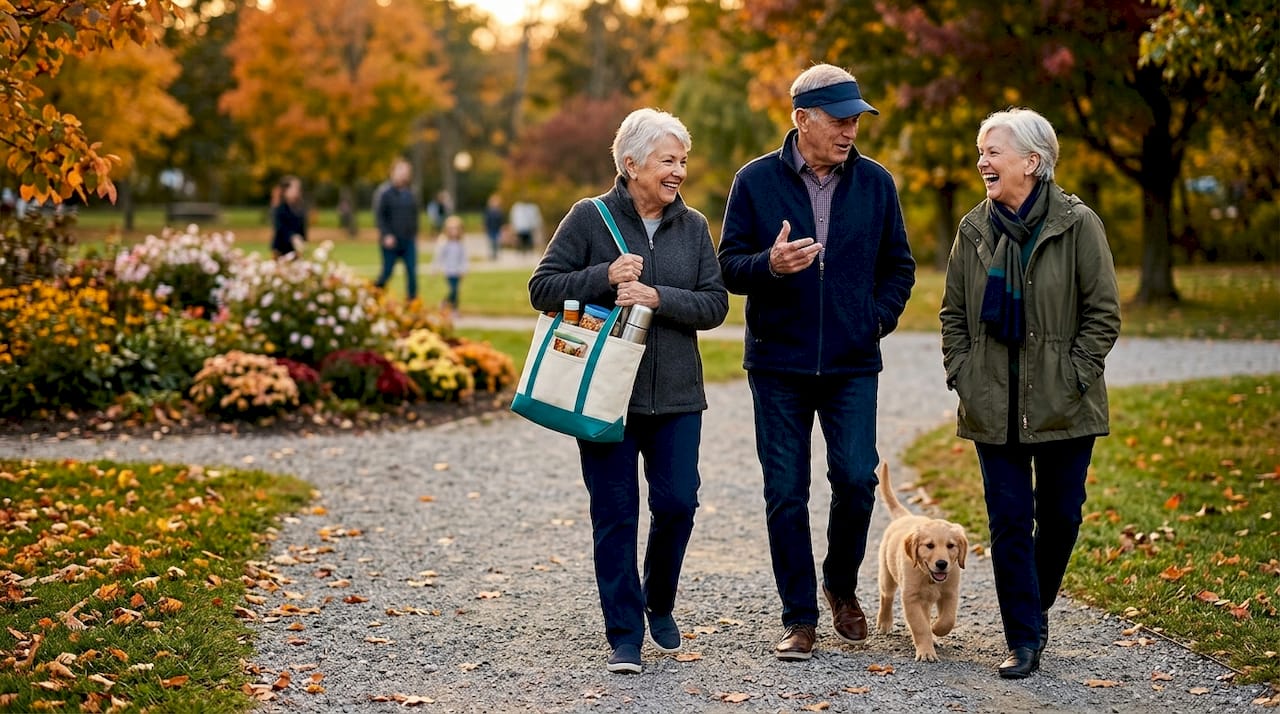
Here is something worth sitting with. Independence and isolation are not the same thing. You can be deeply independent and still have a strong Support Circle. In fact, the most capable solo agers tend to be the ones who built their circles intentionally, before they needed them.
The research is clear on one point: planned companionship works. Waiting for social connection to happen organically is less reliable than building it into your schedule. This is not about being needy. It is about being smart.
What does that look like in practice?
A book club, a faith community, a volunteer shift, or a fitness class gives you regular face-to-face contact with purpose attached. That shared purpose is what makes the connection stick.
Identify one or two people in your life for a weekly check-in, not just in emergencies, but as a regular rhythm. This could be a neighbor, a longtime friend, or someone you have met through a community group.
Giving your time keeps you engaged, provides structure, and puts you around people who share your values. It also quietly addresses something that solo agers often miss: the feeling of being needed.
Online contact helps, but internet use can increase loneliness when it replaces face-to-face time rather than adding to it. Use video calls to maintain existing relationships, but build new ones in person.
Pro Tip
Think about the balance in your relationships. Are you always the one receiving help? Offer something too. Bring food to a neighbor. Share a skill. Relationships built on mutual exchange last longer and feel more satisfying than one-sided ones.
Support networks also include specialized health programs designed specifically for older adults, which often combine health monitoring with social engagement. For more on creating meaningful connections, explore our guide on building well-being without family.
Many solo agers spend significant time planning finances and legal documents but overlook the people side of planning.
Consider identifying:
Even a small support circle can dramatically improve your ability to age independently.
This is the area most solo agers put off. It feels abstract until something goes wrong. Then it feels very urgent and very late. If you are new to the big-picture questions of solo aging, our Solo Aging 101 guide provides a clear starting point. The truth is that early legal planning is what gives you control over your own care when you can no longer speak for yourself in a crisis.
Here is a straightforward sequence to follow:
This is the person who makes medical decisions on your behalf if you cannot. Choose someone you trust completely and who understands what you want. Do not just name someone you feel obligated to name.
Your primary person might be unavailable in a crisis. Have a second name ready. Legal authority and practical access are different things, so be specific about who has what role.
This is the legal document that formalizes your healthcare proxy's authority. Without it, hospitals may default to next of kin or, worse, to court-appointed decision-makers.
A will, a durable power of attorney for finances, and a living will or advance directive are the foundation. These do not require an expensive attorney, but they do require intention.
Who has a key to your home? Who knows your medical history and where your documents are stored? Legal authority means nothing if no one can get in the door.
Your healthcare proxy, your doctor, and at least one trusted friend should all know where your documents are and what you want.
Once these documents are completed, store copies in a dedicated Solo Aging Binder so they can be located quickly during an emergency. If you do not have one yet, read our guide on creating a Solo Aging Binder.
For a thorough walkthrough of this process, Agingsolo has a practical guide for solo agers that covers care planning in detail. There is also a focused resource on end-of-life planning for those aging without children nearby.
The big plans matter. So do the small ones. Daily safety and well-being as a solo ager come from habits that are consistent and practical, not complicated.
A few areas worth your attention:
Reduce fall risks by removing loose rugs, adding grab bars in the bathroom, and keeping pathways clear. Falls are the leading cause of injury for older adults, and living alone means no one is immediately available to help.
Use a weekly pill organizer or a medication management app. Missed doses and accidental double-dosing are both common and preventable.
Keep a medical information sheet somewhere visible, like on your refrigerator, that lists your medications, conditions, allergies, and emergency contacts. First responders are trained to look there.
Read, learn something new, play games that challenge your thinking. Mental engagement slows cognitive decline. It also just makes life more interesting.
Most people wait until driving becomes dangerous before they think about alternatives. Plan ahead. Know your local transit options, rideshare services, and which friends or neighbors might help with rides.
Solo agers are more likely to skip meals or eat poorly when motivation is low. Simple meal prep routines, meal delivery options, or community dining programs make it easier to eat well consistently.
For a full picture of how to make your home work for you as you age, Agingsolo's aging in place guide covers safety, home modifications, and daily independence strategies in depth.
If you are building your elder planning documents from scratch, consider using the Aging Solo My Plan Notebook. It includes organized sections for medical information, emergency contacts, important documents, healthcare planning, finances, and notes — so everything is in one place when it is needed.
Download the Aging Solo My Plan NotebookAfter years of working with older adults, caregivers, and families, I have noticed that most people do not avoid planning because they are irresponsible. They avoid it because it feels overwhelming. The paperwork, the decisions, and the uncertainty can make it easy to postpone. Unfortunately, aging does not wait for us to feel ready.
The hardest part of aging alone is not the practical stuff. It is the moment you realize that the social world you counted on quietly reorganized itself without you noticing.
Solo agers who struggle most are not the ones who lack resources. They are the ones who waited too long to ask for help because they did not want to be a burden. That is an understandable instinct. It is also one that can leave you genuinely isolated when things get hard.
Many solo agers discover that the greatest challenges are not practical tasks but the gradual changes in their social world. Connections shift over time, making intentional planning and relationship-building even more important. Loneliness is often misread, even by the person experiencing it. People tell themselves they are fine with solitude. And many genuinely are. But there is a difference between chosen solitude and the kind that slowly settles in by default. The latter rarely announces itself clearly.
The most important thing you can do is not wait for a health scare or a crisis to start planning. Start building your Support Circle now. Name your people now. Get your documents in order now. Not because something bad is about to happen, but because doing it from a place of strength feels completely different than doing it from fear.
Aging solo can be a life lived with real intention and real dignity. That is not wishful thinking. It is what the evidence points toward when you put deliberate structure around connection, planning, and daily well-being.
Aging Solo exists to help people create a future that is both independent and connected. Whether you are planning years ahead or responding to changes happening now, the goal is the same: building a life supported by preparation, purpose, and meaningful relationships.
One of the best ways to begin is by evaluating your current level of solo readiness. Understanding where you are today can help you identify gaps in social connection, emergency planning, home safety, and future support before they become urgent concerns.
Whether you are looking for a structured starting point or need guidance on a specific challenge, the solo aging explained resource is a strong place to begin. You can also explore solo aging 101 for a clear, step-by-step overview of what to prioritize.
Planning ahead is not about pessimism. It is about making sure your future stays in your hands.
Start Planning TodayYou do not need to know exactly what the future holds. In fact, no one does. The point of long-term care planning and future care planning is not to predict every curve ahead. It is to build enough flexibility that you can handle the ones that come — whether that means aging in place, transitioning to a senior living community, or building a support network for seniors that carries you through changes you did not anticipate.
A well-prepared solo ager is not someone who has everything figured out. It is someone who has taken the time to create options — people to call, documents in place, a home that is safe, and habits that keep them connected. That groundwork means that when life shifts, you have room to respond rather than react. For many, this is the essence of aging independently — not doing everything alone, but having the right elder care planning checklist in place so that independence and dignity remain yours.
Strong planning today creates more options tomorrow. That is the heart of what Aging Solo is about: building a life that is supported by intention, not defined by uncertainty.
aging in place guide
solo aging explained
solo aging 101
philosophy
life care plans