
Discover what aging in place truly means for solo agers. This essential guide offers practical tips for safety, independence, and building your support network—all from the comfort of your own home.
Navigate through this comprehensive guide
It means living safely and independently in your own home as you age, with proactive plans for support.
Address fall risks, improve lighting, and add grab bars to create a safer environment.
Build intentional circles of friends, neighbors, and paid help for daily and emergency needs.
Keep vital documents, medical info, and contacts organized and accessible for peace of mind.
Aging in place works best if you're proactive, flexible, and prepared to adapt as needs change.
Isolation is as dangerous as a fall. Build meaningful connections before you need them.
Let's start by defining what aging in place truly means and how it looks for someone aging solo.
Staying in your own home as you grow older sounds comforting. Familiar. Independent. But for solo agers, it also requires intentional planning, honest self-awareness, and support systems that don't happen automatically.
For solo agers, aging in place means something more deliberate. It means staying in your home and community while intentionally building the support systems that keep you safe, connected, and supported over time. It's not passive. It's a choice you keep making, one thoughtful decision at a time.
The goal is not simply staying home. The goal is staying safe, capable, and connected while doing it.
Your home environment supports your physical wellbeing
You direct your own daily life and decisions
You know where to turn when you need support
Your space feels like home, not a facility
One of the biggest misconceptions is that aging in place means doing everything alone. It doesn't. In fact, the most successful solo agers build invisible networks of support around themselves—neighbors who check in, services that handle heavy tasks, and digital tools that provide backup. The goal isn't proving you can do everything alone. The goal is remaining in control of your life for as long as possible.
The hardest part for many solo agers is not making changes. It's recognizing when changes are needed in the first place.
| Option | Independence | Support Structure | Cost Range |
|---|---|---|---|
| Aging in place | High | Self-directed, flexible | Low to moderate |
| Assisted living | Moderate | Facility-managed | High |
| Moving in with family | Varies | Family-dependent | Low to moderate |
| Continuing care community | Moderate to low | Structured and tiered | High |
Aging in place offers the most freedom. But it also requires the most planning, particularly for solo agers who don't have a built-in backup at home.
Once we understand the concept, it's time to tackle the most actionable starting point: making the home itself safer.
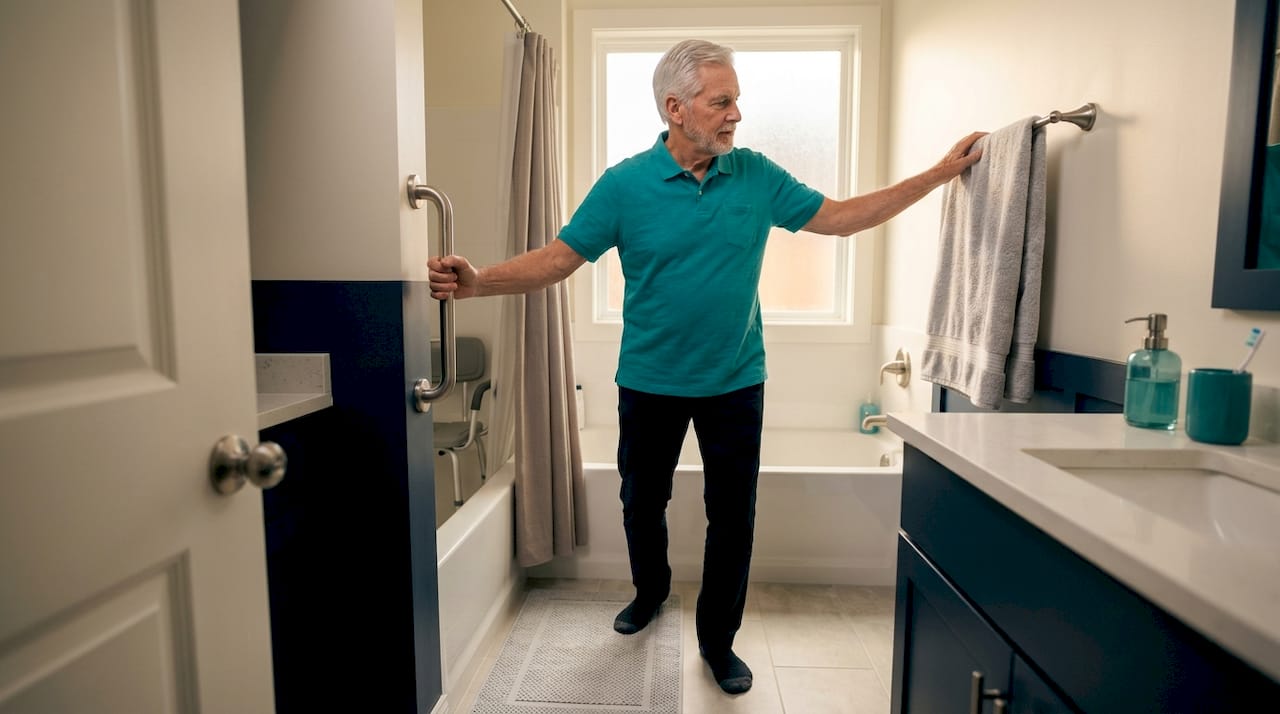
You can have the best support circle in the world, but if your home is a physical hazard, everything else becomes harder. Home safety is the bedrock of aging in place. It shapes everything from mobility and accessibility to long-term independence.
One in four adults over 65 falls each year, and falls are the leading cause of injury among older adults. For someone living alone, a fall without anyone nearby to help is more than a medical event. It's a crisis.
Sometimes it's not the injury itself that changes everything. It's the loss of confidence afterward.
The good news? Most falls are preventable with small, targeted changes.
In the shower, tub, and near the toilet. These are the single highest-impact change you can make.
Loose rugs are one of the most common fall hazards in the home.
Throughout the house, especially at the top and bottom of stairs. A motion-sensor night light costs under $15.
To floors in the bathroom and kitchen.
Keep them within easy reach, reducing the need to climb or stretch.
With a healthcare provider since some affect balance and increase fall risk.
| Hazard | Risk Level | Fix |
|---|---|---|
| Loose rugs | High | Remove or secure with nonslip backing |
| Poor lighting | High | Add motion-sensor lights, brighter bulbs |
| No grab bars | High | Install in bathroom immediately |
| Slippery floors | Moderate | Nonslip strips or mats |
| Cluttered walkways | Moderate | Declutter and clear pathways |
| Hard-to-reach items | Low | Reorganize storage to waist height |
Don't try to fix everything at once. Start with the bathroom and the path between your bedroom and bathroom. Those two areas are where most nighttime falls happen.
With the physical home prepared, the next step is creating a network that turns independence into a sustainable reality.
This short video offers another helpful perspective on what aging in place actually looks like in everyday life:
Loneliness affects physical health, increases cognitive decline, and means no one notices when something goes wrong. For solo agers, isolation can become just as dangerous as a physical fall. Both increase risk. Both quietly reduce independence over time.
Support doesn't always come from relatives. For many solo agers, trusted friends, neighbors, faith communities, and chosen family become the real foundation of aging well.
Solo agers who are 50 and older and living without nearby family find that aging in place works best when you design a safety net—one that combines home safety with a plan for emergencies and ongoing help.
Even one or two neighbors who know you can check in, notice your car hasn't moved, or call for help in an emergency.
Regular, scheduled contact with trusted friends provides both social connection and a low-key safety check.
Area Agencies on Aging (AAA) in most communities offer services like meal delivery, transportation, and in-home assistance.
Home care aides, house cleaners, grocery delivery services, and errand runners fill practical gaps.
Care managers and support brokers can help coordinate and manage complex support needs.
Video calls, telehealth appointments, and online communities keep you connected.
"For older adults living alone, the most effective safety net isn't one strong rope. It's a patchwork of connections, some planned, some organic, and all of them intentional."
Rotate your check-in routines. If the same neighbor always checks on you, what happens when they're traveling? Build a short list of two or three backup contacts for consistent coverage.
The support circle does more than prevent emergencies. It gives you people to celebrate with, neighbors to wave to, and friends who notice when you seem off. For deeper guidance on structuring your support, explore life care planning resources.
Having a support circle is step one. Now, let's make sure you're truly prepared for whatever life throws your way.
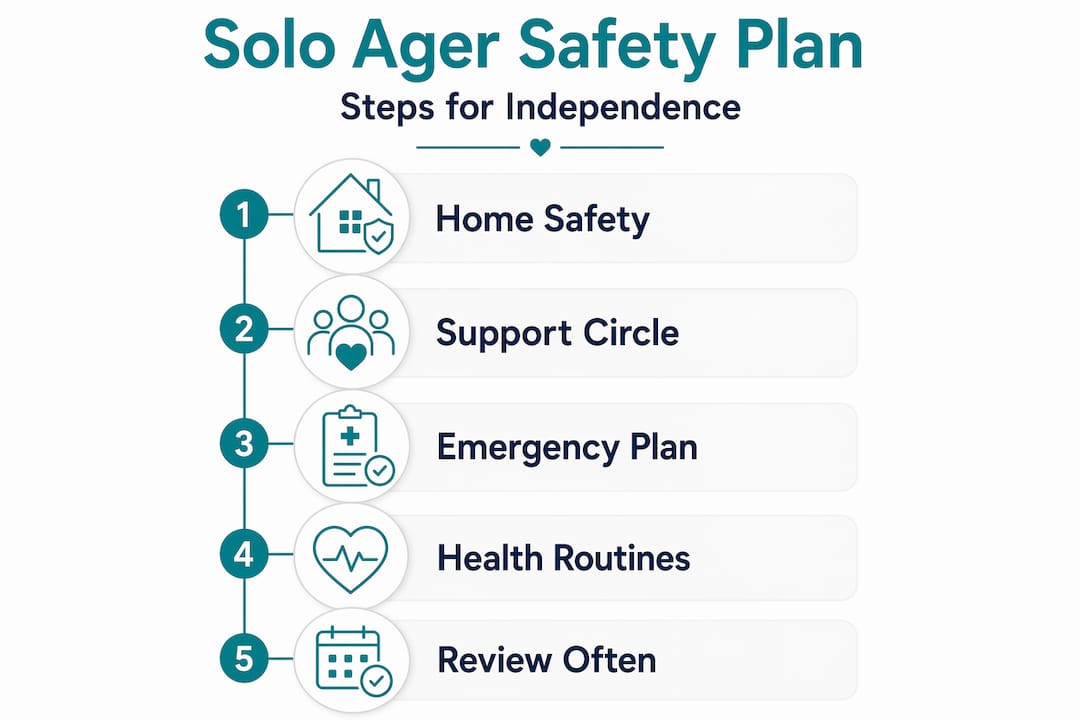
Solo agers often say the thing that worries them most isn't day-to-day living. It's the unexpected. A medical emergency. A power outage that lasts four days. A sudden health change that makes getting around harder. Good planning turns those "what ifs" into "I've got this."
Include at least three people outside your home who know your situation, have a key, and can be reached at any hour.
Include diagnoses, medications, dosages, allergies, doctor contacts, and insurance info. Keep printed and digital copies.
A trusted neighbor or friend should have a spare key, or use a lockbox with a combination they know.
Daily texts, weekly calls, or in-person visits. Put it on the calendar so it happens consistently.
Wearable alert devices that let you call for help with a button press are especially valuable for solo agers.
Contacts change, health changes, and your needs change. Update accordingly.
Use a free app designed for check-ins and reminders to automate parts of your routine. Some apps allow you to set a daily check-in, and if you don't respond, they alert a contact you've chosen. This creates a quiet safety layer.
For ongoing care, think in terms of routines, not just crises. Telehealth appointments, regular social contact, and scheduled help around the home all contribute to a steady, supported daily life. Strategies to stay independent over time combine physical activity, social engagement, and proactive health management.
Let's wrap up the practical roadmap with an honest look at when aging in place works, and when it may not.
Aging in place is the right choice for many solo agers. But it isn't the right choice for every situation, and pretending otherwise does you a disservice. Aging in place requires meeting conditions of safety, comfort, and ability to live independently. When those conditions can't be met, even the strongest desire to stay home may not be enough.
| Factor | Aging in Place | Assisted Living | Moving to Family |
|---|---|---|---|
| Control over daily life | High | Moderate | Varies |
| Social environment | Self-built | Built in | Family-dependent |
| Cost | Low to moderate | High | Varies |
| Care availability | Arranged independently | On-site staff | Family-dependent |
| Flexibility over time | High | Moderate | Low to moderate |
| Best for | Independent, proactive planners | Those needing daily care | Those with willing, nearby family |
None of these mean aging in place is impossible. But they do mean the plan needs serious attention, and possibly some creative alternatives.
Now, let's look beyond checklists to what's often missed by guides on aging in place.
There's a version of independence that sounds appealing but quietly sets people up for harm. It's the idea that true independence means needing no one. Managing everything yourself. Asking for nothing. That version of independence isn't strength. It's isolation wearing a mask.
The solo agers who thrive are not the ones who need the least. They're the ones who ask the right people for the right things at the right time.
They've thought through who to call at 2 a.m. They've arranged grocery delivery before their knee got bad, not after. They've told their neighbor: "I'll knock on your wall if I need help."
That kind of planning feels vulnerable at first. It requires admitting that the future will look different from today. But here's what we've seen: the people who do this early, who build their networks before they feel urgent, end up with far more independence than those who wait until a crisis forces their hand.
Real independence is flexible. It knows when to hold steady and when to reach out. It doesn't mean never needing help. It means staying in charge of how and when help comes into your life.
The romantic notion of total self-sufficiency often leads solo agers to delay planning until they no longer have good options. And then the decision gets made for them, not by them.
That's the goal of an intentional planning philosophy for solo aging: not a rigid plan, but a living one you revisit, adjust, and own.
If you're ready to put these strategies into practice, here's how you can get started today.
You don't need to have everything figured out before you begin. The most important thing is to start, even with one small step. Maybe that's checking your bathroom for grab bars. Maybe it's texting a neighbor to introduce yourself. Maybe it's pulling together your medical information into one folder.
At Aging Solo, we've built practical, grounded resources specifically for solo agers who want to stay active and independent without going it completely alone.
You'll find step-by-step guidance for building your support circle resources, putting together a life care planning guide, and much more. These tools are designed to give you clarity, confidence, and a realistic path forward, wherever you're starting from.
Aging in place is not about pretending you'll never need help. It's about building a life where support, safety, and independence can coexist.
The strongest solo agers are rarely the ones doing everything alone. They're the ones willing to prepare early, adapt honestly, and stay connected along the way.
You've already taken the first step by getting informed.
Let's keep moving.
Get quick answers to common questions about aging in place for solo agers.
Explore more resources to help you age independently and confidently.
Practical strategies for maintaining independence and physical activity.
Your complete resource center for solo aging planning.
Learn how to create a comprehensive life care plan.
Understanding the approach behind successful solo aging.