
All Articles

Aging Solo Today

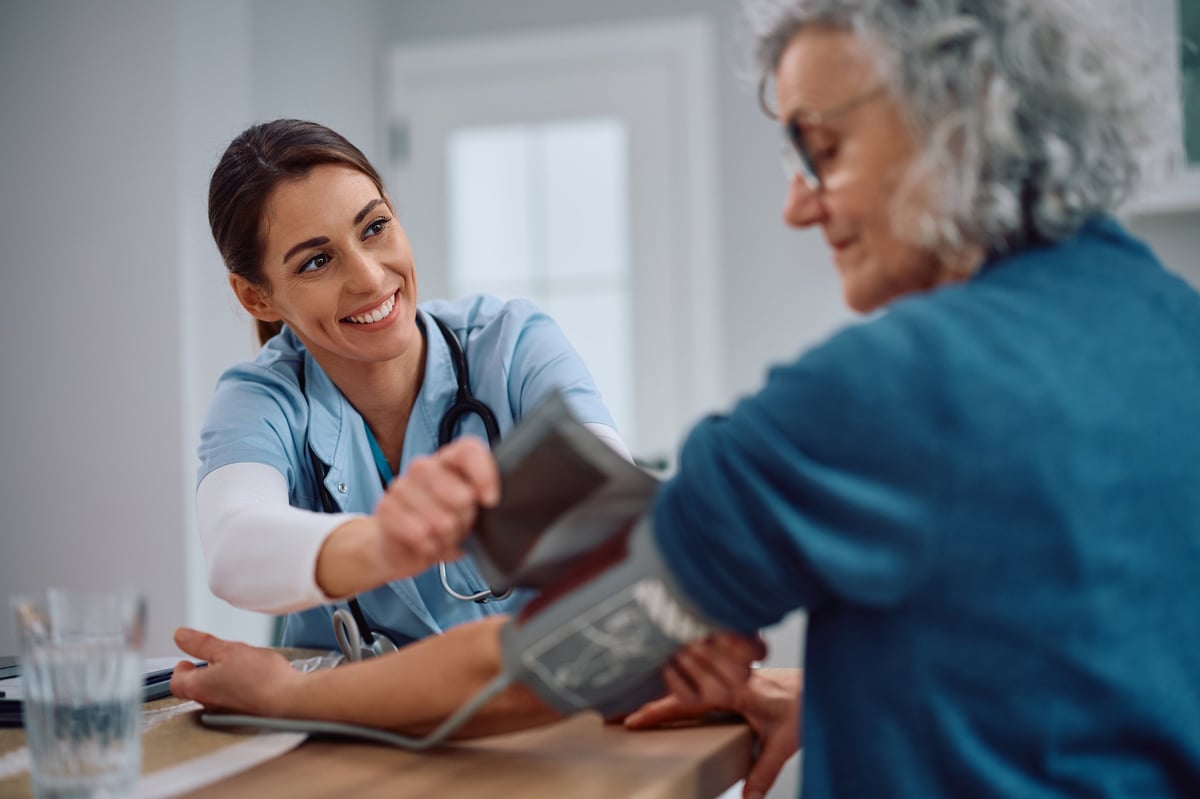
Happy visiting nurse checking blood pressure of a senior woman at home

Your Numbers, On Your Terms: Choosing a Blood Pressure Monitor When You Live Alone

Comparing three upper-arm monitors that support Apple Health

By Mike C., Founder of Aging Solo Today

11 min read · October 4, 2026

There is something reassuring about having useful information close at hand. If your healthcare professional recommends checking your blood pressure at home, a reliable monitor can help you build a record without trying to remember numbers from one appointment to the next.

When you live alone, the practical details matter. Can you position the cuff yourself? Can you read the display comfortably? Will the monitor still work when your phone is charging in another room?

A Bluetooth connection can make recordkeeping easier, but the right monitor also needs to fit your arm and your routine.

This guide compares three upper-arm monitors that support Apple Health through their companion apps: the Omron Evolv, Greater Goods Bluetooth Blood Pressure Monitor, and Withings BPM Connect.

This is a researched comparison, not a hands-on review. Aging Solo Today has not personally tested these products. It offers general consumer information, not medical advice. Ask your healthcare professional whether home monitoring is appropriate for you and how often to check.

Start With Accuracy and Fit

Before comparing apps or extra features, look at the basics.

The American Heart Association recommends an automatic upper-arm monitor with a properly sized cuff. It advises choosing a validated device and generally recommends upper-arm monitors over wrist or finger models. Bring your monitor to an appointment so your healthcare professional can check your technique and compare results.

Check the validated list

Use the US Blood Pressure Validated Device Listing to check the exact model you plan to purchase. Similar names and packaging can hide differences between models.

Measure before you order

Measure around your upper arm. Don't assume a "standard" or "wide range" cuff will fit. If you need another size, confirm a compatible cuff exists and that the monitor is validated for it.

Then consider everyday usability

A monitor can have excellent specifications and still be the wrong fit for your hands, eyesight, or comfort.

Three Monitors at a Glance

Feature Omron Evolv BP7000 Greater Goods Bluetooth 0604 Withings BPM Connect
Main appeal Compact design without a separate monitor or tube Large backlit display and onboard history Wi-Fi syncing and rechargeable battery
Design Monitor built into the cuff Tabletop monitor with separate cuff Monitor built into the cuff
Included cuff range 9–17 inches 22–42 cm, approximately 8.7–16.5 inches 22–42 cm, approximately 8.7–16.5 inches
Power Four AAA batteries AAA batteries or included AC adapter Rechargeable battery
Connection Bluetooth Bluetooth Wi-Fi and Bluetooth
Companion app OMRON connect Balance Health Withings
Apple Health support Through companion app Through companion app Through companion app

These specifications come from manufacturer information. Check current compatibility, pricing, and package contents before buying.

Omron Evolv: A Compact Design Without Tubes

The Evolv combines the cuff and monitor in one unit. There is no separate tabletop box or connecting tube to arrange, which may make it appealing if you want something compact.

Its shaped cuff may help with positioning, but ease of use is personal. If you have limited shoulder movement, hand strength, or dexterity, try it during the return period rather than assuming the design will be easier.

The Evolv stores up to 100 readings internally. Its app provides access to your recorded history, so the original draft's suggestion that readings live only in the app was too broad.

It uses four AAA batteries and does not support an AC adapter. Its display lacks the large backlit digits available on some tabletop monitors.

Consider it if

You value portability and fewer separate parts, and are comfortable using an app to review your history.

Greater Goods Bluetooth: A Larger Screen and Flexible Power

The Greater Goods 0604 uses a separate cuff and tabletop monitor. Its large backlit display is worth considering if seeing your numbers on the device matters more to you than having the smallest possible unit.

It can take readings without Bluetooth and stores readings for two users. The included batteries and AC adapter give you a choice of power sources.

The Balance Health app supports tracking, reports, and optional Apple Health integration. The included cuff fits an upper-arm circumference of 22–42 cm.

The separate cuff and tube require a little more arranging, so make sure you can position the cuff comfortably by yourself.

Consider it if

You want a larger display, onboard storage, and the option to use wall power.

Withings BPM Connect: Wi-Fi Convenience

The Withings BPM Connect combines the monitor and cuff in a compact unit with a rechargeable battery.

Its distinguishing feature is Wi-Fi. After setup, readings can sync to your Withings account without keeping your phone beside you during every measurement. It also supports Bluetooth and displays results on the device.

However, saving a reading to Withings and transferring it into Apple Health are separate steps. You must enable the appropriate sharing permissions and confirm that readings reach both places.

The manufacturer lists a cuff range of 22–42 cm. Check the app's current phone requirements before purchasing, especially if you use an older iPhone.

Consider it if

You want Wi-Fi syncing and prefer recharging a device to replacing batteries.

Apple Health: Useful Recordkeeping With a Few Setup Steps

These monitors connect through their own apps. Apple Health is an additional destination for your readings, rather than a replacement for the manufacturer's setup process.

  1. 1

    Follow the manufacturer's pairing instructions.

  2. 2

    Enable permission to share blood pressure readings with Apple Health.

  3. 3

    Take a practice reading.

  4. 4

    Confirm that it appears in the manufacturer's app and Apple Health.

  5. 5

    Check again after changing phones or installing major software updates.

OMRON and Withings both provide instructions for enabling Apple Health sharing. Menu names and sync behavior can change with app updates.

If syncing stops, follow the manufacturer's troubleshooting guidance. Unpairing and reconnecting may help with some problems, but it should not be treated as a universal fix.

Before your next appointment, ask how your healthcare team prefers to receive your readings. A report, printed log, or another method may be easier for them to use.

Sharing also deserves a conversation. Decide who receives your information, how often they will review it, and what you want them to do if something concerns them. An app should not be your emergency plan.

Make the Routine Easy to Keep

Choose a comfortable chair and a surface where you can support your arm. Keep the monitor and its power supplies nearby.

For accurate readings

Ask your healthcare professional what range is appropriate for you and when to call. Do not change or stop prescribed medication based on home readings alone.

When to call 911

If either number is above 180 systolic or 120 diastolic and you have chest pain, shortness of breath, weakness, vision changes, or difficulty speaking, call 911. Without symptoms, wait at least one minute, repeat the measurement, and contact your healthcare professional immediately if it remains that high.

Choose What You Will Actually Use

There is no single best monitor for everyone who lives alone.

The Omron Evolv may appeal to someone who wants a compact unit without tubes. Greater Goods may suit someone who prioritizes a larger screen and wall power. Withings may appeal to someone who wants Wi-Fi syncing and a rechargeable battery.

Start with validated accuracy and cuff fit. Then choose the design you can use comfortably and consistently. Apple Health compatibility is helpful, but it should come after those essentials.

Living independently includes knowing when information helps and when another person's expertise matters. A good monitor can support both.

Free Blood Pressure Monitor Buying Checklist

Use our one-page checklist to compare cuff fit, screen readability, power options, app compatibility, and first-week setup.

Keep it beside you while shopping, and bring your questions to your healthcare professional or pharmacist.

Get the Free Blood Pressure Monitor Buying Checklist

Free guide · Opens in a new tab

Frequently Asked Questions

Informational content, not medical advice

This article offers general consumer information. It is not medical advice. Aging Solo Today has not personally tested these products. Ask your healthcare professional whether home monitoring is appropriate for you and how often to check.

Sources and Product Information