
Isolation & Connection
Aging alone comes with unique risks — but understanding them early gives you time to build support, strengthen your safety net, and protect your independence before a crisis occurs.
TL;DR
Solo agers face increasing risks of loneliness, health emergencies, and decision-making gaps without a support system. Building intentional relationships, legal plans, and integrating health routines can effectively reduce isolation and mitigate health risks. Practical steps include establishing key contacts, legal documents, and combining social activities with health behaviors for a resilient aging plan.
Solo ager isolation challenges are the emotional, practical, and social difficulties adults face when aging without a spouse, partner, or nearby family support system. The term "solo ager," coined by geriatric care manager Carol Marak, describes a growing population: in 2023, 26% of U.S. adults 65+ lived alone. These adults face a distinct set of risks that go well beyond ordinary loneliness. Understanding these challenges early gives you time to build support, strengthen your safety net, and protect your independence before a crisis occurs. Solo aging done well is proactive, not reactive.
Loneliness in aging is not simply feeling sad on a quiet evening. It is a persistent, subjective sense of disconnection that builds slowly and affects your health in measurable ways. 40% of adults 45+ report feeling lonely, with the highest rates among those aged 45 to 49 at 49%. That means nearly half of people in their late 40s and early 50s are already experiencing this, long before they reach the years when support needs intensify.
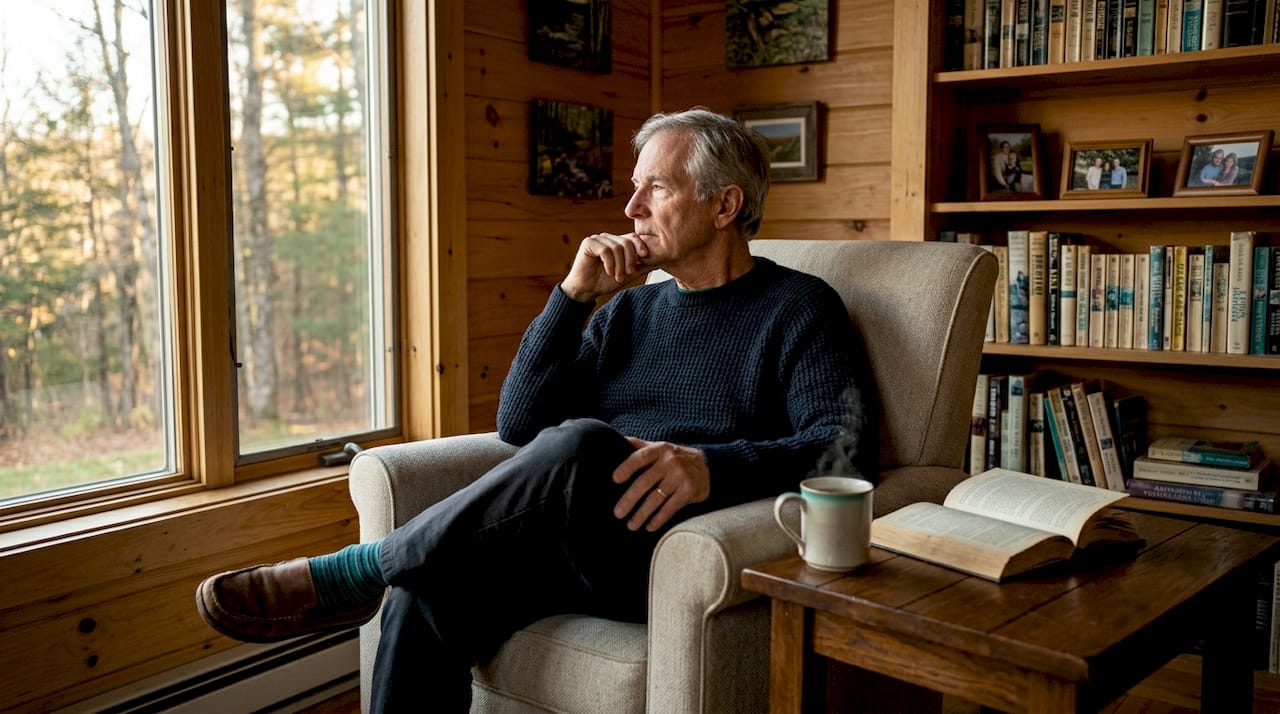
Loneliness is not the same as social isolation. Isolation is an objective count of social contacts. Loneliness is how connected you feel, regardless of how many people are around you. This distinction matters because interventions targeting subjective connection produce better outcomes than simply adding more social events to a calendar. You can attend a weekly group and still feel deeply alone if the relationships feel hollow. For solo agers especially, this distinction is critical — aging alone is a practical reality, but feeling lonely doesn't have to be.
Pro Tip: Start with one relationship you already have and deepen it intentionally. A weekly phone call with a neighbor or old friend does more for your sense of connection than joining three new groups you feel lukewarm about.
Many solo agers carry an unspoken belief that needing help or admitting loneliness is a personal failure. This stigma keeps people from reaching out, asking for support, or even acknowledging to themselves that the quiet feels heavier than expected. It is one of the most underreported common solo ager isolation challenges because it operates invisibly.
During COVID-19, older adults living alone experienced worsened quality of life at higher rates than those with household companions. The crisis exposed how fragile social routines can be when they depend entirely on external structures like workplaces, churches, or fitness centers. When those structures disappeared, solo agers had fewer built-in fallbacks. Recognizing that vulnerability is not weakness. It is honest planning.
This is one of the most concrete and sobering challenges of aging alone. 39% of solo agers have no one to call if they are sick and confined to bed. That number is not a hypothetical. It reflects a real gap in daily safety that most people do not notice until a crisis arrives.
Delayed care is a serious risk. Even a minor illness can become much more serious when there is no one available to notice a problem or help coordinate care. A fall, a sudden illness, or a medication reaction can escalate quickly when no one checks in regularly. Solo agers who understand why isolation affects health outcomes are better positioned to build the check-in systems and emergency contacts that fill this gap before it becomes urgent. For a step-by-step approach, see our living alone emergency planning guide.
55% of solo agers have no one to discuss medical decisions with, and coverage for health and financial powers of attorney remains low across this population. This is not just an inconvenience. Without a designated healthcare proxy or durable power of attorney, medical staff may be forced to make decisions without input from anyone who knows you or your wishes.
Structured legal planning is one of the most important investments a solo ager can make. It is a core safety tool. Setting up a healthcare proxy early gives you control over who speaks for you when you cannot speak for yourself. Informal friendships, no matter how warm, cannot substitute for someone with legal decision-making authority. If you're just getting started, our Solo Aging 101 guide lays out the foundational steps.
Financial resilience is an often-overlooked part of successful solo aging. Living alone is expensive. Solo agers carry the full cost of housing, utilities, food, and healthcare without a second income to share the burden. In 2023, 20% of older adults living alone were in poverty compared to 6% of those not living alone. That gap is significant and it shapes every other challenge on this list.
Financial stress limits access to transportation, social activities, and home modifications that support independence. It also increases the likelihood of cutting back on medications or skipping medical appointments. The practical vulnerabilities that increase isolation risks are often financial at their root, which is why contingency planning needs to include a realistic look at long-term costs.
Fear of rejection, low confidence in social settings, and reduced mobility all make it harder for solo agers to engage with community groups or local activities. The decline in religious service attendance and volunteer participation among older adults has removed two of the most reliable social anchors that previous generations relied on.
Here is a comparison of social factors that protect against isolation versus those that increase risk:
| Protective factors | Risk factors |
|---|---|
| Regular neighbor socializing | Geographic isolation or rural location |
| Participation in accessible hobbies | Mobility limitations without adaptations |
| Community group membership | Declining religious or volunteer participation |
| Consistent phone or video check-ins | Low digital literacy with no in-person backup |
| Trusted friend with decision-making role | No designated emergency contact |
Building community as a solo ager does not require a dramatic overhaul of your social life. It starts with identifying two or three consistent points of contact and protecting them deliberately.
Technology offers genuine help for social isolation in seniors. Video calls, online communities, and digital check-in tools can reduce the distance between solo agers and the people who matter to them. But technology interventions must be easy to use and supplemented by in-person contact. Digital-only strategies often fail older adults with low tech literacy or limited mobility.
Socially assistive robots, telehealth platforms, and digital family support tools showed varied effectiveness during COVID-19. The consistent finding was that technology works best as a supplement, not a replacement, for physical presence and local community ties. If your entire social plan lives on a screen, it is worth adding at least one in-person anchor.
Living alone increases the likelihood of developing dementia, according to UCSF professor Elena Portacolone and AARP research on dementia and solo aging. Institutional support for solo agers with cognitive decline remains limited, and home health aide availability is inconsistent across regions.
Prolonged loneliness is a recognized risk factor for dementia, not just a mood concern. This reframes the entire conversation around social connection. Staying socially engaged is not a lifestyle preference. It is a health behavior with the same weight as exercise or sleep. While isolation is only one of many factors that influence cognitive health, maintaining meaningful social connections remains an important protective habit.
Loneliness is linked to higher cardiovascular and cerebrovascular risk, while social isolation alone does not carry the same physiological burden. This distinction from BMC Geriatrics research published in 2026 clarifies where the real danger lies. It is the feeling of being disconnected, not just the fact of living alone, that drives the worst health outcomes.
"Social disconnection leads to psychological, behavioral, and physiological negative effects, increasing risk for cognitive and cardiovascular conditions." — BMC Geriatrics, 2026
Loneliness also disrupts sleep, affects metabolic health, and drives behaviors like inactivity and poor diet. These effects compound over time. Pairing social goals with health routines, like medication reminders and regular physical activity, addresses both the cause and the downstream effects at once.
Many solo agers have friends and acquaintances but no one with the practical capacity to step in during a real crisis. Support networks must provide both companionship and legal or operational capacity. Informal friendships alone do not prevent crisis escalation without someone who has decision-maker authority and knows your situation.
Building a real safety net means being intentional about roles, not just relationships.
Who would step in if something happened tomorrow?
Consider who would:
If you cannot answer those questions with a specific name, that is the gap to close first. Agingsolo's guide to aging alone essentials walks through exactly how to map and fill those roles.
Coping with aging alone is more manageable when you work from a concrete plan rather than a general intention to "be more social." The most effective approaches combine legal preparation, consistent social routines, and accessible activities.
A durable power of attorney and healthcare proxy are the foundation. Do not wait for a health event to prompt this.
These are people who know your situation and check in regularly. Quality matters more than quantity.
A weekly class, a regular volunteer shift, or a standing lunch date creates social contact without requiring constant effort to initiate.
Professional caregivers can provide both practical support and consistent human contact for solo agers who need more than informal networks can offer.
Schedule a walk with a neighbor. Join a group fitness class. Combine connection with movement so both happen consistently.
Pro Tip: Tell at least one person in your network where your important documents are kept and how to reach your doctor. This single conversation can prevent a crisis from becoming a catastrophe.
The most effective response to solo ager isolation challenges combines legal preparation, consistent anchor relationships, and health-aware social routines, not any single strategy alone.
| Point | Details |
|---|---|
| Loneliness vs. isolation | Loneliness is subjective disconnection; interventions must target how connected you feel, not just contact frequency. |
| Legal gaps are urgent | 55% of solo agers lack someone to discuss medical decisions with; a healthcare proxy and power of attorney are non-negotiable. |
| Health risks are real | Loneliness is linked to cardiovascular risk and dementia; treating social connection as a health behavior changes outcomes. |
| Technology has limits | Digital tools supplement but do not replace in-person contact, especially for those with low tech literacy. |
| Safety nets need roles | A support network must include someone with legal authority, not just emotional closeness. |
I have seen a lot of solo agers approach this with a kind of quiet resignation, as if isolation is simply the price of independence. It is not. But the solution is not to fill your calendar with obligations that feel hollow either.
What actually works is small and steady. One neighbor who knows your name and checks in. One legal document that names someone you trust. One activity you genuinely look forward to each week. These are not dramatic gestures. They are the infrastructure of a life that holds together when things get hard.
The legal piece is the one most people delay, and it is the one that matters most in a crisis. I have seen situations where adults aging alone faced hospitalizations without anyone legally authorized to speak on their behalf, and it is an avoidable situation. Getting a healthcare proxy and power of attorney in place is not morbid planning. It is the most caring thing you can do for yourself.
Start where you are. Pick one gap from this list and close it this week. Not all of them. Just one. That is enough to begin.
— Mike
If any of these challenges feel familiar, you are not alone, and you do not have to figure it out from scratch.
Agingsolo is built specifically for adults aging without a traditional support system. The guides, checklists, and planning tools on the site address exactly the gaps covered in this article, from legal preparation to building a reliable social circle. The aging in place guide is a strong starting point if you want a clear, practical framework for safety and independence. You can also explore resources for staying active while aging alone and building your support circle with people who understand what solo aging actually looks like.