
Home Safety & Daily Living

Handle Home Repairs Living Solo: Your Practical Guide

Learn how to handle home repairs living solo with our practical guide. Build confidence, keep tools handy, and maintain your independence!

By Agingsolo May 16, 2026
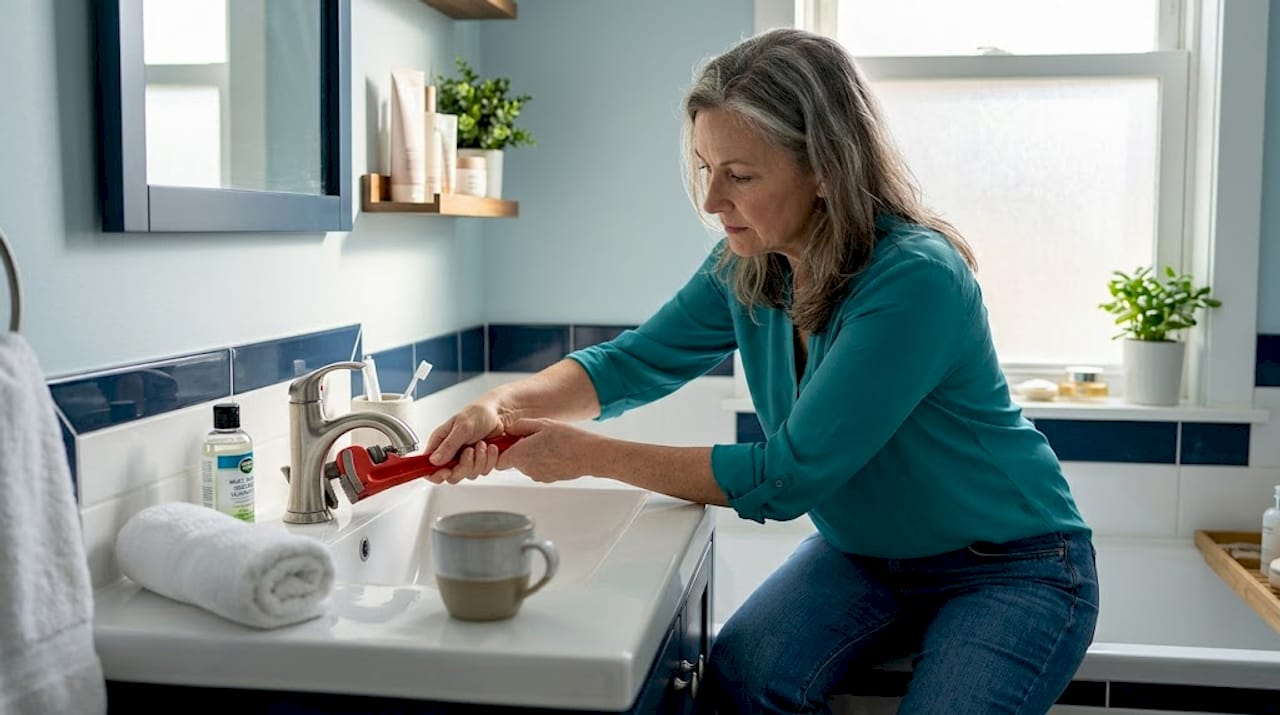
Solo woman repairing faucet in her kitchen

Living alone after 50 comes with a quiet kind of pride. You set the thermostat where you like it, you keep your own schedule, and no one argues with your grocery list. But when a faucet starts dripping at 11 p.m. or a door suddenly refuses to close, that pride can tip into worry fast. Especially when there is no one else in the house to immediately ask, help, or even notice the problem with you.

Learning to handle home repairs while living alone after 50 is not about becoming a contractor overnight. It is about building enough confidence, the right tools, and a steady system so that small problems stay small, and you always know when to pick up the phone instead. For more on home safety for aging in place, explore our guides on creating a safe sanctuary that supports independent living.

Table of Contents

Key Takeaways

Point Details
Build the right toolkit Keep ergonomic, quality tools organized in one spot so repairs feel less daunting to start.
Use the one-touch rule Fix anything under five minutes immediately rather than letting small issues grow into costly ones.
Batch and schedule maintenance Group similar tasks by season or month to stay consistent without feeling overwhelmed.
Know your limits Leave structural, electrical, and in-wall plumbing work to licensed professionals every time.
Build a support contact list Have trusted contractors, neighbors, and community resources ready before an emergency arrives.

Your Essential Toolkit for Solo Home Repairs

Every home repair starts before you pick up a single tool. It starts with knowing what you have and where it is. A prepared toolkit reduces the friction of starting a repair and keeps you safer while doing it. When everything is in one bag or box, you do not talk yourself out of fixing something because finding the right screwdriver feels like too much effort.

Here is what a solid fix-it kit looks like for solo home repair tips that actually get used:

Hammer

16 oz, with a comfortable grip

Screwdriver Set

Phillips and flathead in multiple sizes

Adjustable Pliers

Include needle-nose pliers

Tape Measure

25-foot, locking

Utility Knife

For cutting and trimming

Level

Small torpedo level works fine

Caulk Gun

With silicone caulk

Weatherstripping

Foam tape and door sweeps

Headlamp

Frees both hands when working

Safety Gear

Gloves and safety goggles

One thing worth learning early:

Buy the best quality you can afford for the tools you use most, like your screwdrivers and pliers. Cheap tools slip, strip screws, and fatigue your hands faster. One good investment beats replacing low-quality tools repeatedly.

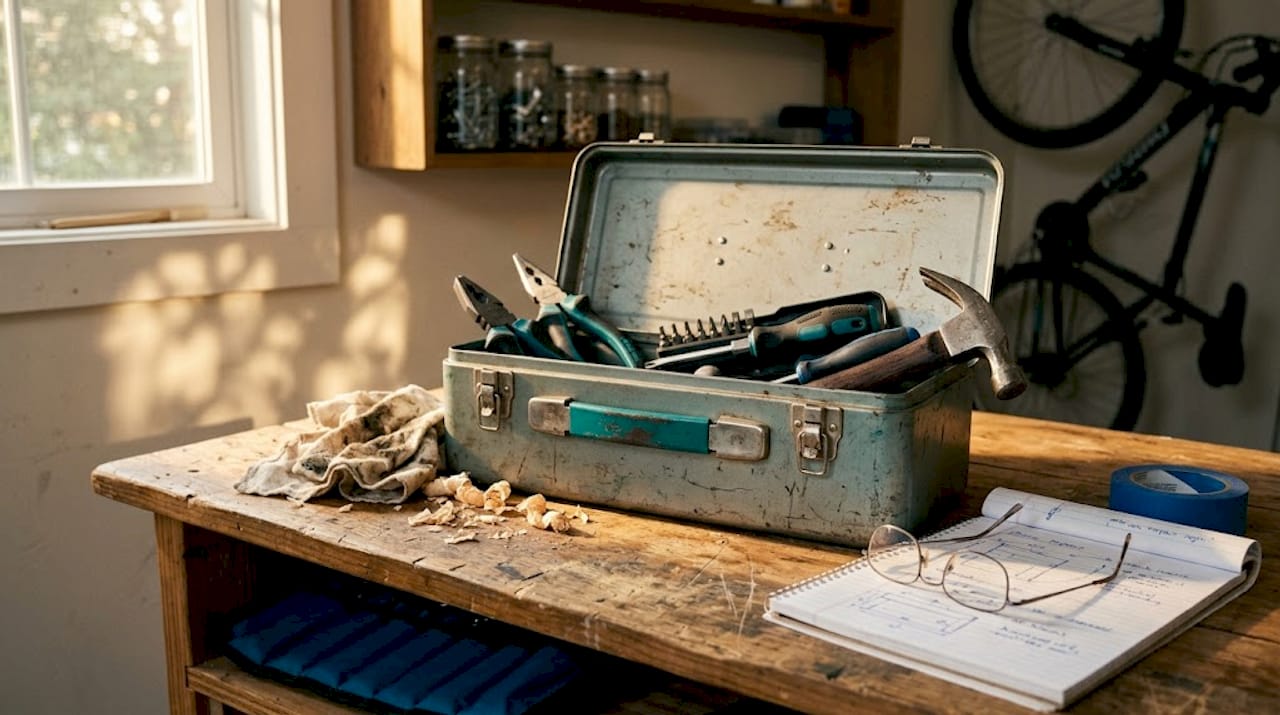
Ergonomic tools in well-used home toolbox
Tool Category Why It Matters for Solo Repairs
Ergonomic Handles Reduce hand strain during extended tasks
Safety Goggles Protect eyes when cutting, drilling, or scraping
Headlamp Frees both hands when working in dark spaces
Quality Caulk Gun Gives you smooth, controlled application

Store your fix-it kit in one dedicated, easy-to-reach spot. A small rolling cart or a handled tote bag works well. You want zero searching time when motivation is high.

Building a Maintenance Routine That Actually Sticks

Here is the truth about single person home upkeep: the repairs that cost the most money are almost always the ones that started as something tiny. A slow drip ignored for six months becomes a water-damaged floor. A clogged gutter becomes a flooded basement. Consistent maintenance can reduce your repair costs by as much as 30%. Living solo often means there is no second set of eyes catching problems early. Small routines matter more because of that.

The challenge for solo adults is that there is no one else to notice a problem and no one to share the mental load of keeping track. That is why the system matters more than the willpower.

The One-Touch Rule

If a repair takes under five minutes, do it the moment you notice it. Fixing small tasks immediately keeps your home from accumulating a list of small annoyances that eventually feels like a wall.

The Batching Method

Group similar tasks together and assign them to a specific day each month or season. This is how you avoid both procrastination and burnout.

Sample Monthly Batch

  1. 1 Test smoke and carbon monoxide detectors
  2. 2 Check under sinks for moisture or drips
  3. 3 Clean the lint trap and wipe down the dryer exterior
  4. 4 Inspect weatherstripping on the front door
  5. 5 Run water in guest or rarely used sinks to prevent drain buildup

The most underrated living alone maintenance hack is anchoring tasks to your existing routines. Pairing maintenance with something you already do, like checking under the kitchen sink while you are putting away groceries, removes the need to remember it separately. It becomes part of how you move through your home, not an extra item on a to-do list.

A small lesson many solo homeowners discover quickly:

Set a recurring phone reminder called "Home 15 Minutes" once a month. Spend exactly 15 minutes doing your batch tasks. Nothing more. The time limit prevents the session from feeling like an all-day project and keeps the habit sustainable.
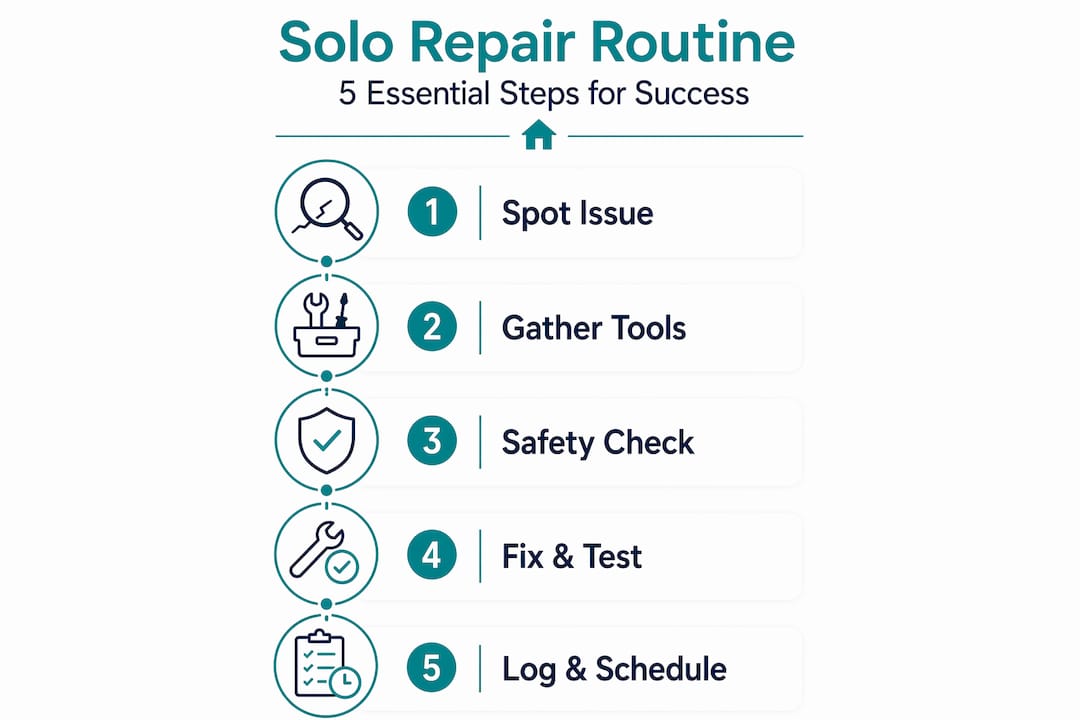

Infographic of key solo home repair steps

The Emotional Reality of Solo Home Maintenance

Sometimes the hardest part of home maintenance while living solo is not the repair itself. It is the constant feeling that every decision, every phone call, and every unexpected problem lands fully on your shoulders. Systems help reduce that emotional exhaustion just as much as they reduce home repairs.

Common DIY Repairs You Can Safely Handle Alone

This is the part where living solo DIY projects shift from intimidating to genuinely satisfying. Most everyday home repairs are well within reach. You do not need a second person watching or handing you tools. You need clear steps and a little patience.

1 Fixing a Leaky Faucet

Turn off the water supply valve under the sink before you touch anything. Most faucet leaks come from a worn washer or O-ring inside the handle. Remove the handle with a screwdriver, replace the washer, and reassemble.

One important rule: tighten only until watertight, then stop. Over-tightening plumbing fittings creates micro-cracks that fail weeks or months later. You will not notice until water is dripping somewhere it should not be.

2 Replacing Caulking Around Tubs and Windows

Old caulk peels, cracks, and lets moisture into places it should never reach. Replacing it yourself is one of the highest-value repairs you can do. Use a putty knife to remove the old caulk completely. Wipe the surface clean and let it dry fully before applying new silicone caulk.

One small detail worth knowing: Fill the tub with water before you apply the caulk. The weight of the water causes the tub to settle slightly. If you caulk an empty tub and then fill it, the caulk seal stretches and fails within weeks.

3 Weatherstripping Drafty Doors

If you feel a draft near your front or back door, you are paying to heat or cool the outdoors. Peel off the old foam tape, clean the door frame, and press new adhesive weatherstripping into place. Door sweeps at the bottom attach with just a few screws.

4 Unclogging Drains and Toilets

A cup plunger handles most sink and toilet clogs. For shower drains, a simple drain snake (the hand-crank kind) costs under $20 and handles hair buildup easily. Skip the chemical drain cleaners whenever possible. They work short-term but damage pipes over time.

One thing worth learning early:

When working alone on any repair that involves water, shut off the main supply valve first until you are confident about the task. A shut-off valve wrench stored with your toolkit makes this a 10-second step.

Know When to Stop

If a repair involves the structural elements of your home, the electrical panel, or plumbing that runs inside walls, call a professional. The "bones" of a home are not DIY territory, no matter how confident you feel. Doing those repairs wrong costs far more than hiring the right person.

Create Your Trusted Repair Contact List Before You Need It

Aging solo does not mean doing everything alone. Building a support circle before emergencies arrive is one of the smartest things you can do for your home and your peace of mind. Having trusted contacts ready means you are not scrambling to find help when something goes wrong.

Reliable Plumber

Trusted Electrician

General Handyman

HVAC Company

Trusted Neighbor

Emergency Contact

Write these contacts down somewhere accessible. Keep them on your phone. Share them with a family member or friend who lives nearby. When an emergency happens, you should not be starting from zero.

Related: Build Your Support Circle — a tool that helps you identify who should be in your corner before you need them.

When to Call for Help and Who to Call

Knowing how to repair things alone is valuable. Knowing when not to is equally so. Some repairs genuinely require a licensed professional, and recognizing the line protects both your home and your personal safety.

Repairs That Always Require a Professional

Build Your Trusted Contact List

The time to build your trusted contact list is before you have an emergency. Think through these four categories and find one or two reliable names for each:

General Handyperson

Small jobs you cannot do alone

Plumber

Beyond a faucet washer

Electrician

Wiring, outlets, and panel work

HVAC Technician

Heating and cooling systems

For solo adults on fixed incomes, cost is a real factor. Many communities offer low or no-cost home repair assistance through Area Agencies on Aging, local nonprofit organizations, and state weatherization programs. Habitat for Humanity's A Brush with Kindness program specifically serves older adults in some areas. The Agingsolo Clearinghouse is a useful starting point for finding local support services that many solo agers do not know exist.

Repair Category DIY or Professional? Notes
Leaky faucet DIY Manageable with basic tools
Caulking tubs and windows DIY Follow the water-fill technique
Electrical panel or wiring Professional Only Safety and legal requirement
In-wall plumbing Professional Only High risk of hidden damage
Weatherstripping and drafts DIY Straightforward and safe
Foundation concerns Professional Only Structural evaluation needed

When You Hire a Contractor

Be clear and specific. Write down what you want done before they arrive. Ask for a written estimate. And know that you are allowed to ask questions, take notes, and say "I need to think about that" before agreeing to additional work. Being a solo homeowner does not mean being a pushover. You have every right to be informed before you sign anything.

What I've Learned About Handling Repairs While Living Solo

"

Most people do not fail at home repairs because they lack skill. They fail because they do not have a system and no one to share the mental weight of keeping a home running. The emotional side of that is real. There is a low-grade exhaustion that comes from being the only one who notices when something needs fixing.

What I have seen work is this: start smaller than you think you need to. One fixed dripping faucet builds more confidence than reading ten guides. One organized fix-it kit changes how approachable repairs feel. You are not trying to master home repair. You are trying to stay ahead of your home in a way that feels steady, not overwhelming.

I also want to say clearly: calling a professional is not giving up. It is smart resource management. The goal of living alone safely is not to do everything yourself. It is to know what you can handle, handle it well, and get the right help for the rest. Staying active and independent means building systems that support you, not exhausting yourself trying to be self-sufficient in every single domain.

Give yourself credit for every repair you complete. And give yourself permission to ask for help without apology.

M

— Mike

Agingsolo

How Agingsolo Can Help You Stay on Top of It All

Agingsolo - Resources for Solo Adults

Managing a home alone takes more than a good toolkit. It takes a plan, a support network, and resources you can actually trust. At Agingsolo, we have built practical guides specifically for solo adults who want to stay independent, safe, and ahead of the challenges that come with aging in place on your own terms.

Whether you are working through your home safety setup, thinking about who to call in a real emergency, or just looking for a community that understands what solo aging actually looks like, we have resources that meet you where you are.

Visit Agingsolo

Explore More on Aging in Place

This guide is part of our collection on aging in place and home safety for older adults living alone. Discover more resources for emergency preparedness and creating a safe sanctuary in your own home.

Frequently Asked Questions

Living Solo Does Not Mean Handling Every Challenge Perfectly

It means building systems, confidence, and support that allow you to stay safe, capable, and independent longer. Sometimes that means fixing the problem yourself. Sometimes it means knowing exactly who to call.