
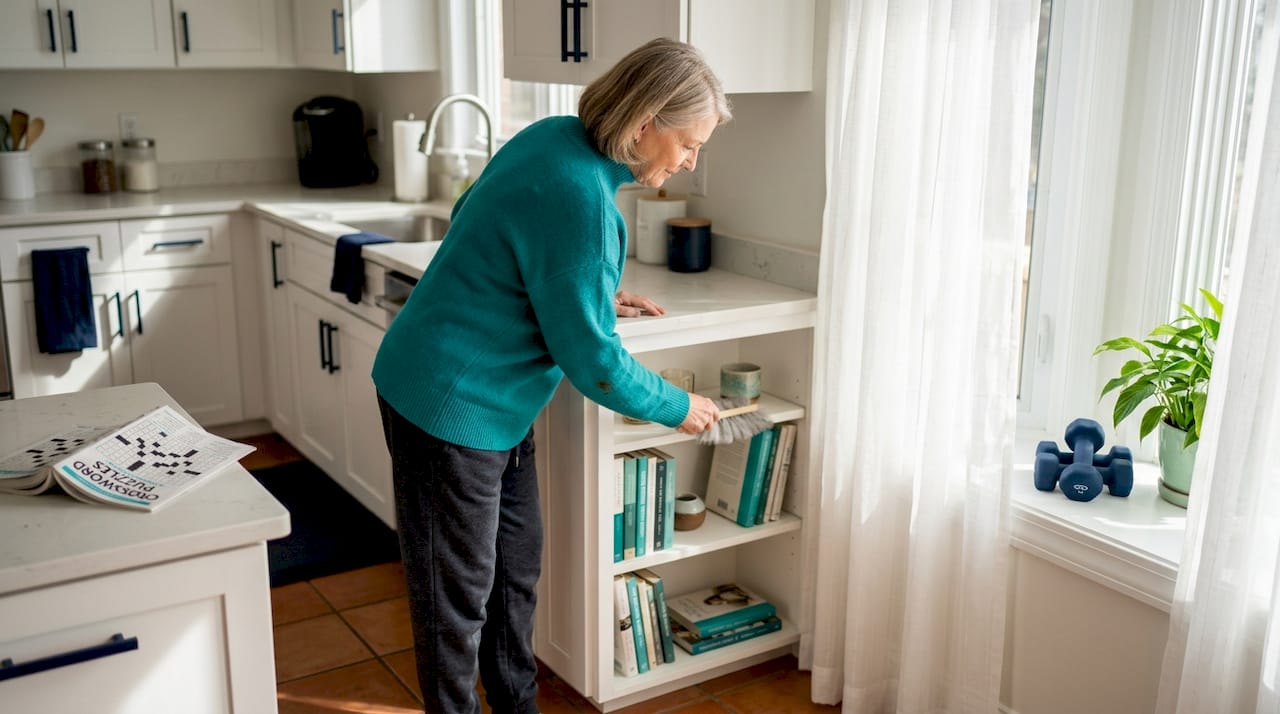
Staying active while navigating aging independently is absolutely possible, and it doesn't require a gym membership or a complicated program. This guide gives you practical, evidence-backed steps designed specifically for the solo ager who wants to move more, fall less, and stay in control of their own life.
When you navigate aging independently, your physical health is directly tied to your independence. If you lose strength or balance, the consequences land on you first. There's no one at home to help you recover from a stumble or notice when you're moving more slowly. That reality makes staying active less of a lifestyle choice and more of a practical necessity.
Regular movement does several important things for your body and mind:
The mental health piece deserves special attention. When you live alone, the quiet can feel heavier than expected on difficult days. Exercise is one of the most reliable natural mood lifters available to you. It's not a cure for loneliness, but it does create a sense of accomplishment, routine, and physical vitality that makes solo life feel more manageable.
"Physical activity can help older adults maintain independence, manage health conditions, and improve quality of life. Even small amounts of movement throughout the day add up and make a real difference."
The CDC Physical Activity Guidelines for Older Adults recommend that older adults aim for at least 150 minutes per week of moderate-intensity aerobic activity, plus muscle-strengthening exercises on two or more days per week, and balance activities. That's the target. But getting there is a process, not a single leap.
Understanding the basics of solo aging can help you put these physical health goals in a broader context of planning for independence.
The most effective approach for older adults combines three types of movement: aerobic activity, strength training, and balance work. Think of these as three legs of a stool. Remove one, and the whole thing becomes unstable.
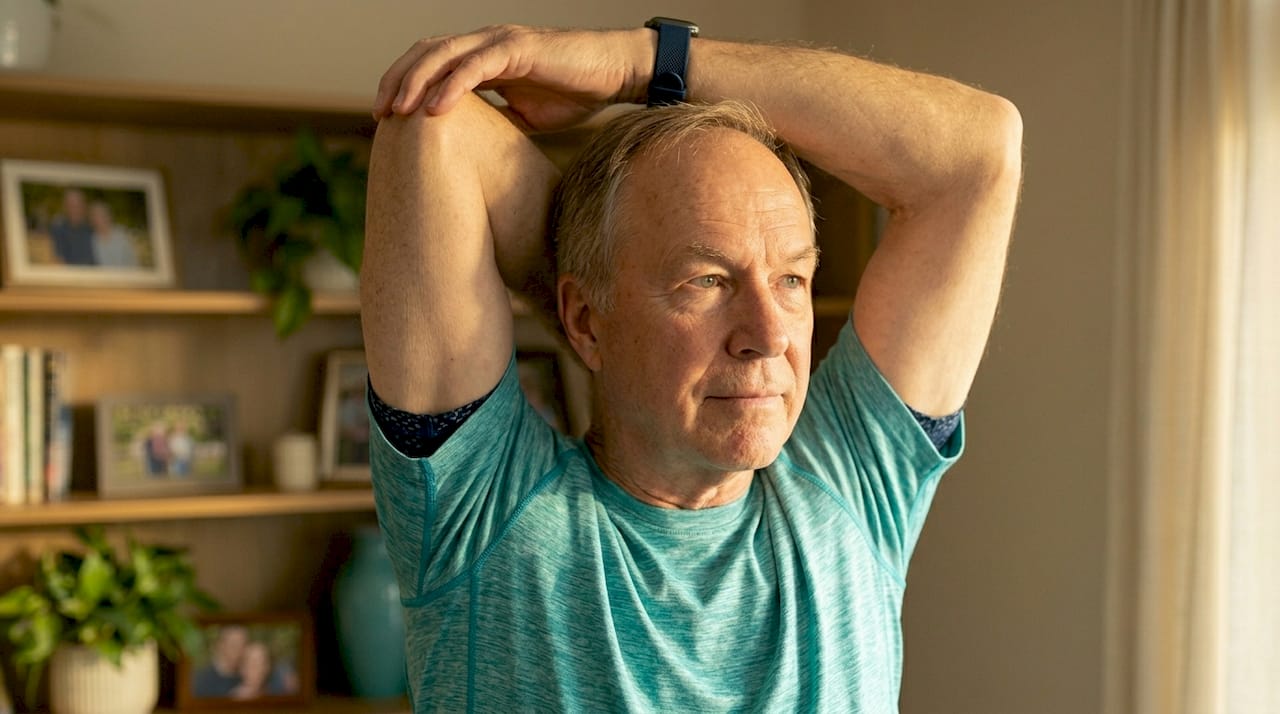
Here's how the three parts break down in a typical week:
| Activity type | Goal per week | Examples |
|---|---|---|
| Aerobic (cardio) | 150 minutes moderate intensity | Brisk walking, swimming, cycling |
| Strength training | 2 or more days | Resistance bands, bodyweight exercises, light weights |
| Balance exercises | Daily or most days | Standing on one foot, heel-to-toe walking, tai chi |
The NIA recommends building toward 150 minutes of moderate aerobic activity weekly while also noting that light-intensity activity and small amounts spread throughout the day count toward your total. That's an important point. You don't have to do it all at once.
Here's how to build your week step by step:
Pro Tip:
Keep a simple paper log or use a tech tool for activity tracking to record what you do each day. Seeing your progress in writing is a powerful motivator, especially when you're your own accountability partner.
The key insight here is that consistency beats intensity every time. A steady 20-minute walk five days a week will do far more for your long-term health than one exhausting hour-long session once a week.
The good news for solo agers is that you don't need to leave home to get effective exercise. Home-based exercise interventions are strongly supported for adults 65 and older as a practical way to improve strength and balance using low-cost resources and minimal supervision. Your living room can become your gym with just a few simple tools.
Here's a practical look at what you need and what you can do:
| Equipment | Cost range | What it supports |
|---|---|---|
| Resistance bands | $10 to $20 | Upper and lower body strength |
| Sturdy chair | Already own | Seated exercises, balance support |
| Yoga mat | $15 to $30 | Floor stretching, core work |
| Pedometer or fitness watch | $20 to $150 | Step counting, motivation |
| Free smartphone apps | Free | Guided workouts, reminders |
A simple home routine might look like this:
10 minutes of gentle stretching and balance work near the kitchen counter
A 15 to 20 minute walk around the block or up and down the hallway
10 minutes of resistance band exercises for arms and legs
5 minutes of seated leg raises and a brief cool-down stretch
That's roughly 45 minutes of movement spread across the day, which is both manageable and effective.
Structured multimodal formats, meaning routines that combine different types of movement, are feasible and practical for community-dwelling older adults who need low-burden options. In plain terms: mixing up your movement types at home works, and it's something you can sustain long-term.
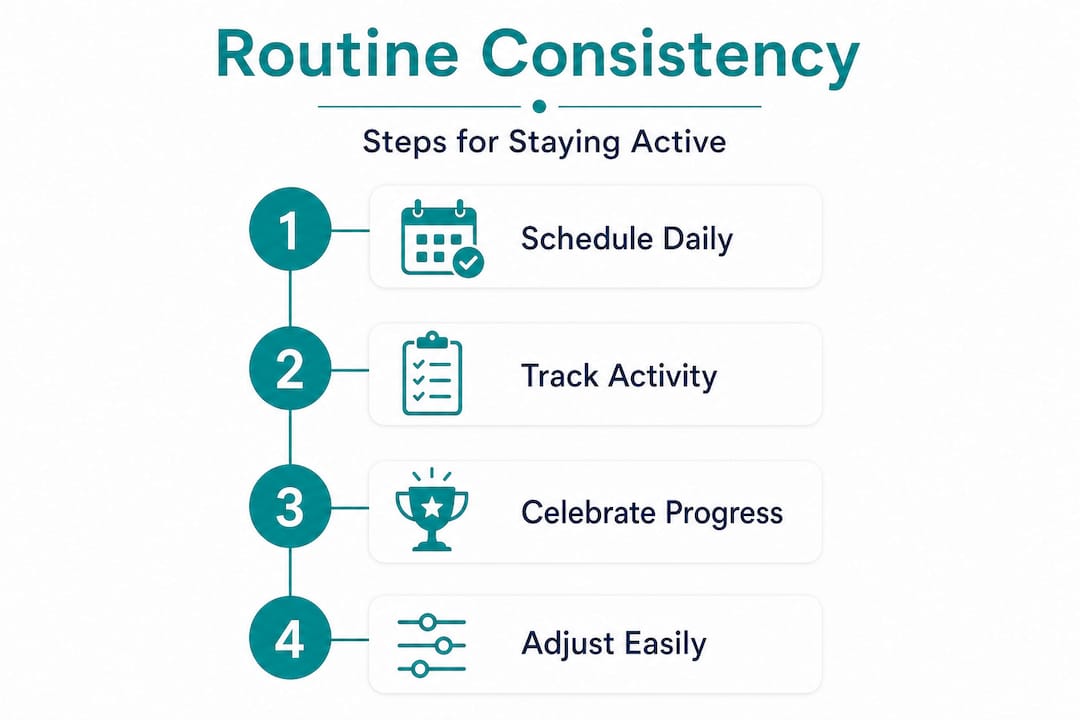
The motivation piece is real. When you live alone, there's no one to notice if you skip a day. Here's how to create your own accountability system:
Pro Tip:
"Exercise snacking" is one of the most underrated strategies for solo agers. Instead of treating exercise as a big scheduled event, think of it as something you sprinkle through your day. Ten squats while waiting for the kettle. A short walk to the mailbox and back twice. Balance practice while brushing your teeth. These small moments genuinely add up.
Safety is especially important when you navigate aging independently. A fall during exercise with no one nearby to help is a serious concern. The good news is that the very exercises you're doing to get stronger also reduce your fall risk significantly. Multimodal exercise, particularly strength and balance training, is supported by strong evidence from randomized trials as an effective way to reduce fall risk in community-dwelling older adults.
Here's your safety checklist before and during home exercise:
Tracking your progress serves two purposes: it keeps you motivated, and it helps you spot when something feels off. Try these simple approaches:
"Reducing sedentary time is just as important as adding structured exercise. Research shows that breaking up long periods of sitting with short movement breaks improves physical and mental health outcomes for older adults."
Research on sedentary time reduction reinforces that movement and social engagement are deeply connected, especially for people navigating aging independently. When you move more, you tend to feel more connected and motivated. When you feel more connected, you move more. Building that upward cycle is one of the most powerful things you can do for your long-term wellbeing.
For motivation that sticks, consider these evidence-backed strategies:
Most people assume that the biggest barrier to exercise for older adults is physical ability or access to resources. In our experience working with solo agers, that's rarely the actual problem. The real obstacle is motivation, and more specifically, the absence of the everyday social cues that most people rely on without realizing it.
When you live with others, you get nudged into movement constantly. Someone suggests a walk. A grandchild wants to play outside. A partner is heading to the gym. These small social prompts are invisible engines of physical activity. When you navigate aging independently, those engines are gone. And willpower alone is a weak substitute.
This is why we believe so strongly in environmental design over willpower.
Instead of trying to motivate yourself from scratch each day, set up your environment to make movement the path of least resistance. Put your walking shoes by the front door. Keep your resistance bands on the couch. Set your phone to remind you to stand up every hour. These small cues do the work that social nudges used to do.
The other thing most solo agers miss is permission to start small. There's a tendency to think that if you can't do a full 30-minute workout, it doesn't count. That thinking keeps people stuck. A five-minute walk counts. Ten chair squats count. Standing up and stretching counts. Progress is not linear, and on the days when motivation is low, doing just a little is infinitely better than doing nothing.
Technology for motivation can fill the gap that social support used to fill. Fitness apps, wearable trackers, and even simple phone alarms can act as consistent, judgment-free accountability partners. They won't replace human connection, but they can keep you moving on the days when the quiet feels heavy.
The most important shift is this: stop measuring yourself against an ideal routine and start celebrating every step forward.
Consistency built on small, sustainable actions will serve you far better than any perfect plan you can't stick to.
Staying active is one of the most powerful things you can do to protect your independence as a solo ager. But activity is just one piece of the puzzle.

Aging Solo offers a full range of practical tools designed specifically for people navigating life without a traditional support network. From the solo aging guide that walks you through the big-picture planning questions, to the health and emergency planning resources that help you prepare for unexpected situations, to the soloist's toolkit packed with checklists and step-by-step guides, there's real, grounded support waiting for you. You don't have to figure this out alone.
Aging Solo Today offers practical guidance, planning tools, and encouragement for adults navigating aging independently. Explore resources designed to help you stay moving, connected, and confident about the future.