
Discover how to build resilience in aging and thrive as a solo ager. Gain practical tools to maintain independence and enhance well-being.
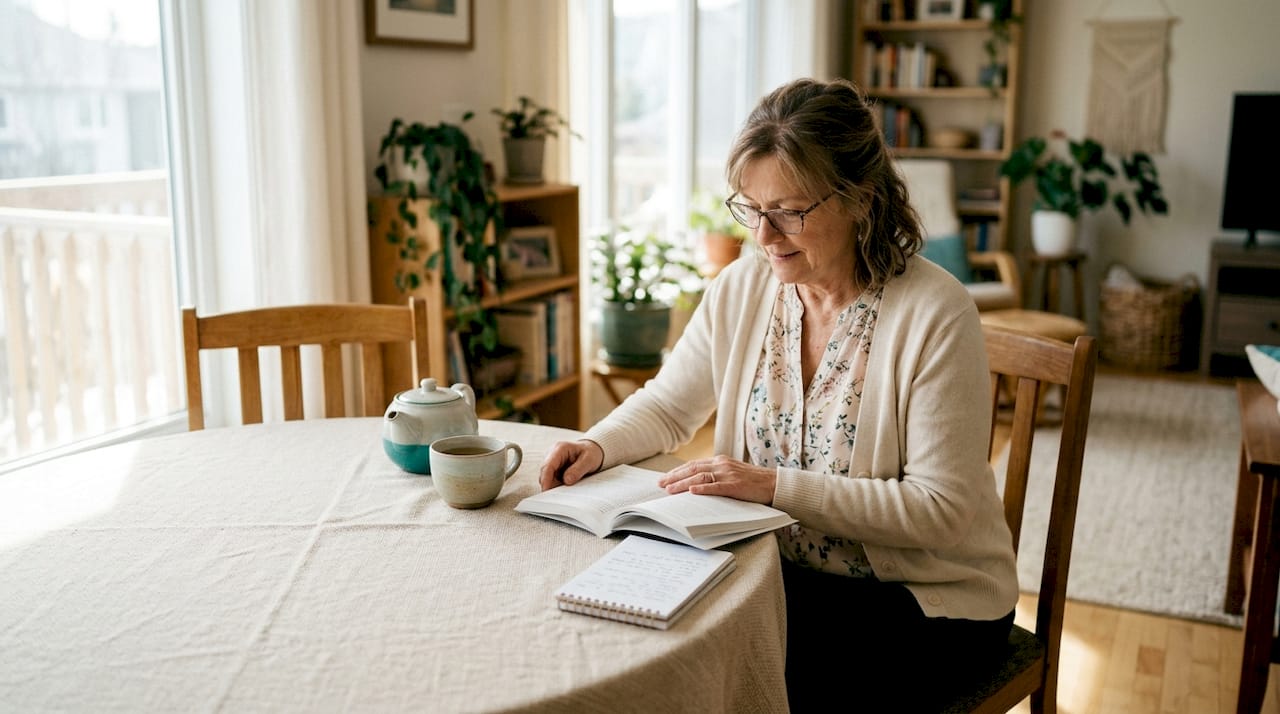
Resilience in aging is a skill that can be developed through positive beliefs, physical activity, and social engagement. Building resilience helps solo agers maintain independence and improves physical and cognitive health over time. Creating a support network and engaging in preventive health measures are essential for aging well alone.
Growing older without a spouse or nearby family can sometimes feel uncertain. But resilience is not something you either have or don't have. It is a set of habits, relationships, and perspectives that can be developed throughout life. For solo agers, resilience becomes one of the most important tools for maintaining independence and aging successfully. Research shows 45.15% of adults 65+ improved their physical or cognitive function over 12 years, driven largely by positive age beliefs. That finding challenges the assumption that decline is inevitable and points toward something more hopeful: healthy aging is within reach. Agingsolo exists to help you act on exactly that kind of evidence, with practical tools grounded in real science.
Psychological resilience strongly predicts well-being in older adults. A study of adults aged 65 and older found a significant positive correlation between resilience scores and subjective well-being (P<0.001). That means higher resilience does not just feel better — it measurably improves how people rate their own lives.
The mental health picture for older adults is more serious than most people realize. Over 52% of community-dwelling older adults face measurable mental health risks. That statistic matters because it means mental health challenges in aging are not rare exceptions — they are the norm, and building resilience is one of the most direct ways to counter them.
Cognitive resilience adds another layer. Researchers distinguish between two opposing forces: cognitive reserve and psychological debt. Cognitive reserve, built through education, meaningful work, and leisure activities, protects brain function even in the presence of Alzheimer's disease biomarkers. Psychological debt, driven by chronic depression and stress, erodes those same defenses. The practical implication is clear: what you do with your time and how you manage stress directly shapes your cognitive future.
Genetics play a smaller role than most people assume. In long-living adults, the APOE ε4 allele, a known Alzheimer's risk gene, has a diminished effect compared to lifestyle factors like mood, hobbies, and quality of life. Environment and daily choices outweigh genetic predisposition in very old adults. That is genuinely good news for anyone willing to act.
| Resilience Factor | Associated Outcome |
|---|---|
| Positive age beliefs | 45.15% improvement in physical or cognitive function over 12 years |
| Moderate physical activity | Lower mental health risk; higher resilience scores |
| Cognitive reserve (education, hobbies) | Protective against cognitive decline independent of Alzheimer's pathology |
| Psychological debt (depression, stress) | Reduced cognitive defenses; faster decline |
| Social engagement and hobbies | Linked to better cognitive function in long-living adults |
The most powerful place to start is how you think about aging itself. Positive age beliefs improve self-efficacy and health behaviors, reducing the fatalism that causes many older adults to stop trying. When you expect to adapt and recover, you are more likely to take the steps that actually produce adaptation and recovery.
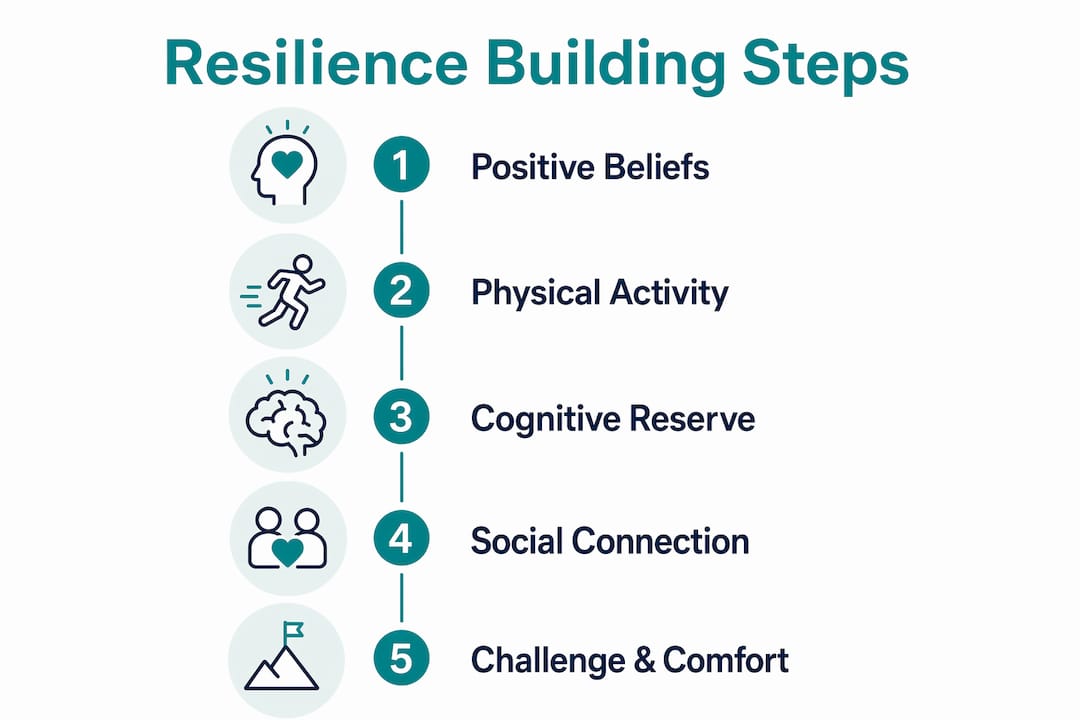
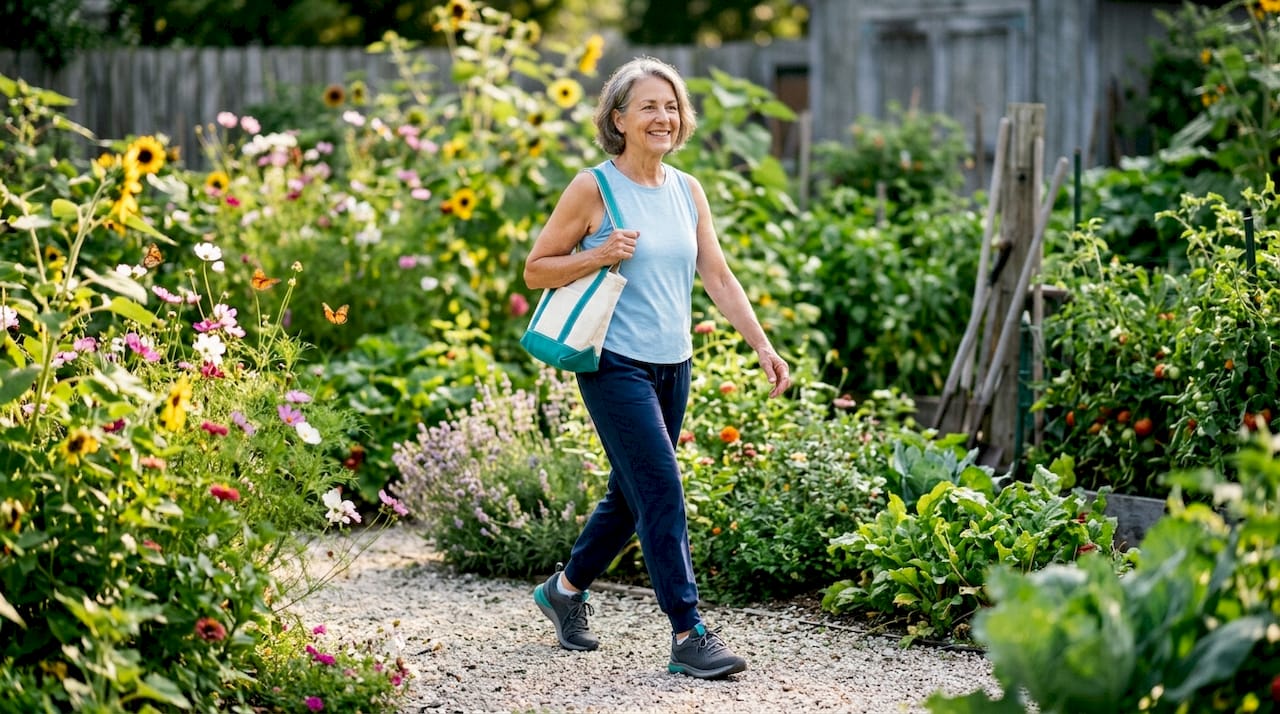
Physical activity is the most well-documented resilience strategy available. Walking, jogging, strength training, and yoga all improve stress management and reduce depressive symptoms in older adults. Moderate activity — not intense training — correlates best with resilience and a sense of coherence. You do not need to run a 5K. A consistent 30-minute walk most days produces real results.
Building cognitive reserve is equally concrete. Leisure activities like reading, learning a language, playing a musical instrument, or joining a book club all contribute to the mental buffer that protects against cognitive decline. The key is staying mentally active in ways that genuinely engage you, not just passive consumption. Staying active and independent as a solo ager means combining physical movement with mental stimulation regularly.
Timing also matters more than most people expect. Resilience strategies work best when implemented before major mobility or autonomy loss occurs. Starting now, before a health crisis forces your hand, gives you far more options and better outcomes. Nature-based activities like gardening, hiking, or simply spending time outdoors are particularly effective at building resilience and reducing stress.
You do not have to change everything today. Start with one daily walk, one phone call to a friend, one community activity, or one new healthy habit. Small actions repeated consistently create lasting resilience.
Pro Tip
Resilience grows best when you combine support with challenge. Comfort and isolation alone do not build it. Pair a reliable support person with a new activity that stretches you slightly, and you create the conditions where resilience actually develops.
Solo agers face a specific set of obstacles that most resilience research does not fully address. Without a built-in support person at home, the risks of social isolation compound quickly. Social isolation and loneliness increase depression and cognitive impairment in older adults. For solo agers, those risks are not theoretical — they are daily realities that require deliberate countermeasures.
Building a support circle is the most direct solution. This does not mean relying on one person. It means creating a small network of neighbors, friends, community members, and professionals who know your situation and can step in when needed. Social connection for seniors starts with intention, not a large social network. Agingsolo's guide to building your support circle walks through exactly how to do this in practical terms, without requiring a large social network to start.
Technology fills gaps that geography and circumstance create. Video calls, telehealth appointments, online communities for older adults, and medical alert systems all reduce isolation and increase access to support. The right technology tools for solo agers are not complicated — they are simple, reliable, and worth setting up before you need them urgently.
Preventive health action is another area where solo agers need to move earlier than most. Without someone at home to notice early warning signs, you carry more responsibility for monitoring your own health. Scheduling regular check-ins with your doctor, tracking your own energy and mood, and acting on small changes before they become large problems are all part of aging with resilience as a solo ager.
The longitudinal evidence is striking. 45.15% of adults 65+ showed measurable improvement in walking speed or cognitive function over a 12-year period. This directly challenges the narrative that aging is a one-way decline. Resilience acts as a buffer, slowing the rate at which stressors like chronic illness, loss, and physical limitation translate into permanent functional decline.
Cognitive resilience specifically refers to the brain's ability to maintain function despite accumulating damage or disease. Mobility, hearing, mood, hobbies, and quality of life all predict cognitive resilience in long-living adults without dementia. Each of those factors is modifiable. You can improve your mood, protect your hearing, pursue hobbies, and work toward a better quality of life at any age.
Resilience also shapes health behaviors in a reinforcing cycle. People with higher resilience are more likely to seek medical care, follow through on treatment, and maintain healthy habits after a setback. That behavioral loop means resilience compounds over time — the more you build it, the more it protects you, and the more it motivates the actions that build it further.
| Health Trajectory | Key Driver | Outcome Over Time |
|---|---|---|
| Improvement | Positive age beliefs, active lifestyle | Gains in walking speed and cognitive function |
| Stable | Moderate activity, social engagement | Slower decline, sustained independence |
| Decline | Isolation, psychological debt, inactivity | Faster cognitive and physical deterioration |
| Recovery | High resilience scores, support network | Better recovery after illness or loss |
For solo agers, maintaining independence at home depends directly on sustaining these resilience-building behaviors over years, not just during a health crisis.
Resilience in aging is a buildable skill, and solo agers who combine positive age beliefs, moderate physical activity, and strong social connections show measurably better health outcomes over time.
| Point | Details |
|---|---|
| Resilience is measurable and improvable | 45.15% of adults 65+ improved physical or cognitive function over 12 years. |
| Start before a crisis hits | Resilience strategies work best when implemented before major mobility or autonomy loss. |
| Cognitive reserve protects the brain | Education, hobbies, and meaningful work build a buffer against cognitive decline. |
| Social connection is non-negotiable | Isolation increases depression and cognitive impairment; a support circle directly counters this. |
| Lifestyle outweighs genetics | Mood, hobbies, and activity level predict cognitive resilience more than genetic risk factors in older adults. |
I have spent a lot of time reading the research on mental strength in seniors, and the finding that consistently surprises people is how much of resilience is environmental, not fixed. Most solo agers I encounter assume they are working with whatever resilience they were born with. The science says otherwise.
What I find most encouraging is the cognitive reserve concept. The idea that reading, learning, and staying curious actively builds a protective buffer in your brain is not motivational language — it is measurable biology. Depression and chronic stress erode that buffer. Hobbies and engagement rebuild it. That is a trade you can make every single day.
The harder truth is that solo agers face a structural disadvantage. No one is automatically watching out for you. That gap does not close on its own. It closes when you build a deliberate network, use available technology, and take preventive health steps before you need them urgently. The importance of resilience in aging is not abstract. For solo agers, it is the practical difference between staying in your home on your own terms and losing that choice.
Don't wait for a health event before you begin building resilience. The strongest evidence shows that resilience is most effective when developed before it becomes necessary. The research on aging confidently after 50 consistently shows that early action produces better outcomes than reactive planning. Start with one habit, one connection, and one honest conversation about what you need.
One thing I've learned from talking with hundreds of older adults is that resilience rarely shows up all at once. It grows through small decisions made consistently over time.
— Mike
Agingsolo is built specifically for people aging without a traditional support system. The guides, checklists, and planning tools on the site address the real challenges solo agers face: housing, safety, support networks, and long-term decision-making.
Aging solo brings unique challenges, but it also offers opportunities to build a life that is intentional, connected, and resilient. Every small step you take today makes tomorrow a little easier.
If you are ready to move from reading about resilience to actually building it, start with what every solo ager needs to know. That resource covers the full picture of aging alone with clarity and practical steps. You can also explore the aging in place guide for concrete strategies on staying safe and independent at home. Agingsolo gives you the tools to plan ahead, not just react.
Start with one habit, one connection, and one honest conversation about what you need.
Start Here