
Discover essential habits for senior self care. Stay healthy and independent with simple daily practices tailored for adults 50 and older.
Agingsolo
Solo Aging Resources
Senior self care is the deliberate practice of caring for your physical health, emotional well-being, and mental sharpness so you can continue living independently and confidently. For adults over 50, these daily habits are not luxuries. They are investments in the life you want to keep living. The National Council on Aging confirms that just 5 minutes daily of self-care activities like walking, listening to music, or talking to a friend builds resilience and reduces stress. Small, steady actions compound over time into real protection against decline.
If you're aging on your own, self-care becomes even more important. There may not be someone else reminding you to drink water, refill medications, or schedule appointments. Building simple routines today helps protect your independence tomorrow.
Physical self-care for older adults centers on three pillars: movement, nutrition, and preventive health. None of these require a gym membership or a complicated schedule. What they do require is consistency.
Strength training 2–3 times weekly with light weights or resistance bands preserves muscle mass and protects joints. That matters because muscle loss accelerates after 50 and directly affects your ability to live independently. Between strength sessions, daily movement like stretching, walking around the block, or chair yoga keeps your body mobile and your mood steady.
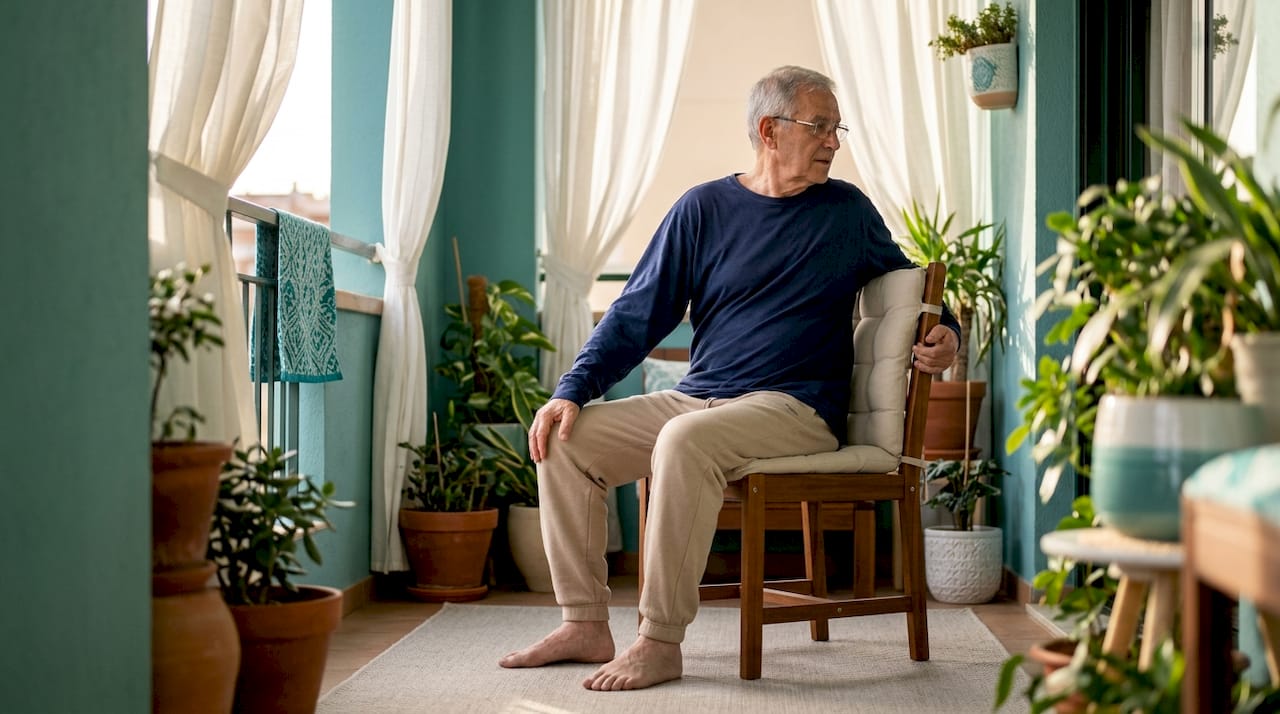
Chair yoga deserves special mention. It builds flexibility and balance without putting stress on your knees or hips. Many community centers offer free or low-cost classes, and you can find instructional videos online or through your local library's digital resources.
Pro Tip:
Start each morning with five minutes of gentle stretching before you get out of bed. It wakes up your joints gradually and reduces the risk of a fall during those first groggy minutes.
A plate built around fruits, vegetables, lean proteins, and whole grains gives your body the fuel it needs to repair tissue and maintain energy. Protein is especially important after 50 because your body becomes less efficient at using it. Aim for a protein source at every meal, whether that is eggs, beans, fish, or Greek yogurt.
Hydration is equally critical and often overlooked. Drink 6–8 glasses of water daily, adjusting upward on hot days or after exercise. Dehydration in older adults can mimic dementia symptoms, cause falls, and lead to urinary tract infections. Keep a water bottle visible on your kitchen counter as a simple reminder. If you take diuretics or have heart or kidney conditions, talk with your healthcare provider about the amount of fluid that's appropriate for you.
Annual wellness visits, dental checkups, vision exams, and recommended vaccinations are all acts of self-care. They catch problems early, when they are easiest to address. If you live alone, scheduling these appointments and keeping a written record of your results is part of a solid health management routine.
Mental and emotional health require the same intentional attention as physical health. Cognitive wellness activities protect memory, reduce anxiety, and give each day a sense of purpose.
Puzzles, reading, learning a new language, or picking up a musical instrument all challenge the brain in ways that support long-term cognitive health. The key is novelty. Doing something slightly outside your comfort zone creates new neural connections. A crossword puzzle you find easy provides less benefit than one that makes you think.
Senior mindfulness techniques do not need to be complicated. Deep breathing for two minutes, a short body scan meditation, or simply sitting quietly with a cup of tea counts. The goal is to interrupt the stress response before it becomes chronic.
Structured morning routines that include a wake-up task, such as solving a simple problem or stepping outside for fresh air, reduce morning inertia and set a positive tone for the rest of the day. Physical activity in the morning also links strongly to mood stability throughout the afternoon and evening.
Pro Tip:
Limit news consumption to one 20-minute window per day. Constant exposure to distressing news can increase stress levels, interfere with sleep, and leave you feeling emotionally drained.
Social connection is a clinical cornerstone of senior well-being, not just a nice-to-have. Strong social relationships improve mental health, strengthen cognition, and reduce the loneliness that many adults aging alone experience. Isolation carries health risks comparable to smoking 15 cigarettes a day, according to public health research.
The good news is that meaningful connection does not require a large social circle. Regular contact with even two or three people provides significant protection. Connection doesn't always mean conversation. Simply becoming a familiar face at the same coffee shop, walking trail, library, or community center helps create a sense of belonging.
| Activity type | Example | Cost |
|---|---|---|
| Community programs | Active Older Adult centers | As low as $15 per year |
| Volunteer work | Local food banks, libraries | Free |
| Interest-based clubs | Book clubs, garden groups | Free or minimal |
| Classes | Art, fitness, cooking | Varies; often subsidized |
| Technology-assisted | Video calls, online communities | Free with internet access |
Programs like the City of Tampa's Active Older Adult centers offer memberships starting at $15 per year for adults 50 and older. These centers run weekday programs from 8am to 6pm covering fitness classes, social events, and skill-building workshops. That kind of structure gives you a reason to leave the house and a community to return to.
Technology tools for seniors like video calling apps and online interest groups also make it easier to stay connected when leaving home is difficult. A weekly video call with a friend or family member counts as real social engagement. Schedule it like an appointment so it actually happens.
Consistency is the engine of self-care. Research suggests many habits take around two months to become automatic, although every person is different. That is worth sitting with. It means that missing a day or two does not erase your progress, but it also means that waiting until you feel motivated is not a reliable strategy. Systems matter more than willpower.
Pro Tip:
Pair a new self-care habit with something you already do automatically. If you always make coffee first thing, place your vitamins next to the coffee maker. The existing habit carries the new one.
Not every self-care practice costs money or requires energy you may not have. Walking a familiar route, calling a friend, sitting in sunlight for 10 minutes, or reading a chapter of a book all qualify. The daily self-care checklist for solo adults does not need to be long. It needs to be real and repeatable.
The biggest obstacle to self-care for older adults is not physical. It is the belief that self-care is selfish or indulgent. Many seniors view self-care as a luxury rather than a necessity, and that mindset quietly erodes independence over time.
Self-care is not a reward for when things are going well. It is the practice that keeps things going well.
A second common pitfall is stopping self-care routines when health challenges arise. This is exactly backward. When mobility or health limitations appear, small adaptive modifications and professional support resources become more important, not less. A physical therapist can redesign your exercise routine around a new limitation. A social worker can connect you with community resources. Asking for help is itself an act of self-care.
If you are aging in place alone, building a realistic plan for when self-care becomes harder is one of the most protective things you can do now.
Consistent senior self care, built on physical movement, mental engagement, social connection, and practical daily systems, is the most reliable path to long-term independence.
| Point | Details |
|---|---|
| Start with 5 minutes daily | Small daily habits like walking or calling a friend build resilience and reduce stress over time. |
| Habit formation takes 66 days | Consistency matters more than intensity; missing one day does not erase your progress. |
| Social connection is clinical | Regular contact with even two or three people protects mental health and slows cognitive decline. |
| Build your environment | A visible self-care kit, posted contacts, and a medication system reduce friction and support daily follow-through. |
| Reframe self-care as necessity | Viewing self-care as maintenance rather than indulgence removes guilt and improves long-term adoption. |
The adults who stay independent the longest tend to treat self-care like paying the electric bill. It isn't exciting, but they know life works better when they don't skip it.
What surprises most people is how little it takes to make a real difference. A consistent sleep schedule, a weekly social commitment, and a short morning routine do more for long-term independence than any single medical intervention. The compounding effect of small, steady habits is genuinely underestimated.
The misconception that self-care is indulgent is, in my view, the most damaging idea in this space. It keeps capable, thoughtful people from doing the simple things that would protect their health and freedom. If you would not call changing your oil self-indulgent, you should not call taking a daily walk self-indulgent either.
My honest advice: pick two habits from this article, not ten. Practice them for a couple of months until they feel automatic. Then add one more. That is how lasting change actually works. Not through a dramatic overhaul, but through quiet, steady commitment to showing up for yourself.
— Mike
Agingsolo is built for adults who are growing older without a built-in support system nearby. Whether you live alone by choice or circumstance, the resources here are designed to help you plan ahead with clarity and confidence.

The elder planning guide for solo agers covers housing, decision-making, safety checklists, and wellness routines in one place. If you are ready to build a realistic plan for aging well on your own terms, that is the right place to start. Agingsolo also offers tools for building a support circle so you are never truly without backup, even when you live alone. Your independence is worth planning for.