
Discover what independent living for seniors means and how it promotes autonomy, social connections, and a vibrant lifestyle.

Independent living can be a confusing term. Many people assume it means receiving help with daily tasks, while others think it is simply a retirement apartment. In reality, independent living is neither. It is a housing option designed for active older adults who want less responsibility, more social connection, and a safer, maintenance-free lifestyle while remaining fully independent.
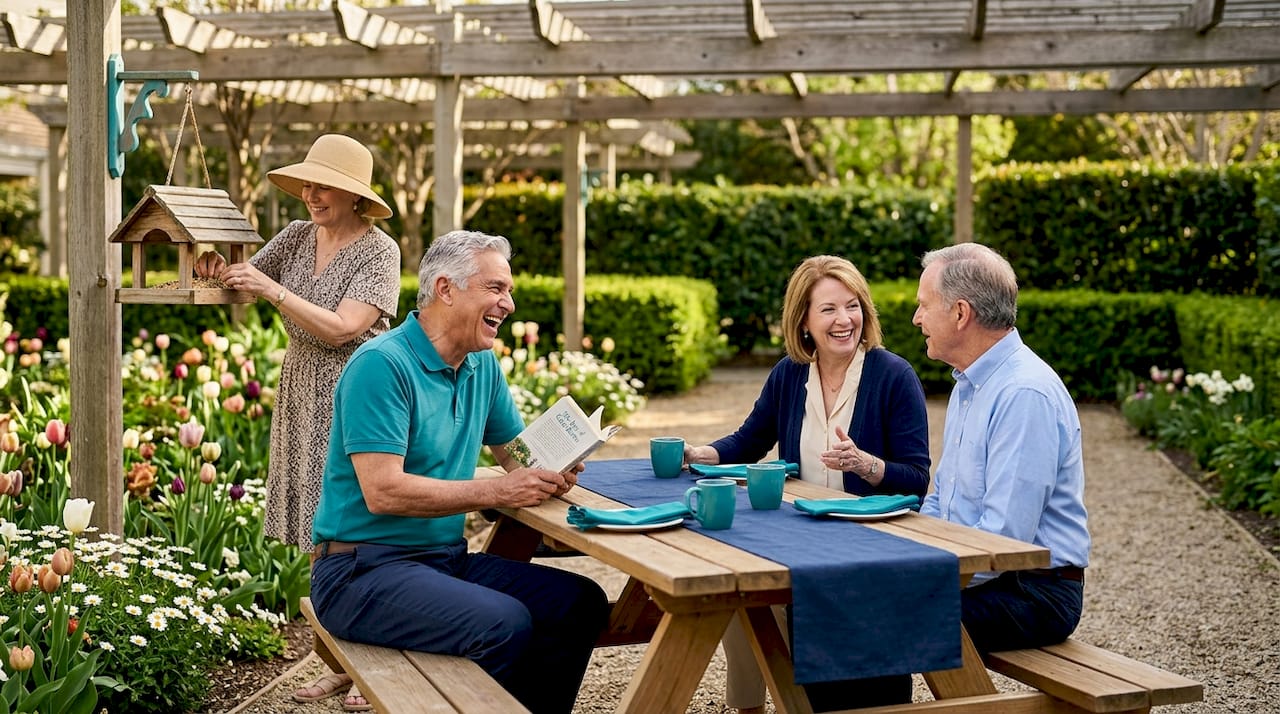
Independent living is housing for active older adults who can care for themselves, typically those over age 60, with a focus on lifestyle rather than medical support. Think of it less like a care facility and more like a community designed specifically for people who want to simplify their lives without giving up their independence. Residents live in private apartments, cottages, or villas within a shared community setting.
The environment often feels closer to a well-run residential community than a healthcare facility. Safety infrastructure is present. Emergency response is available through security staff and first responders. But the day-to-day responsibility for personal care, medication, and health management stays with you.
What makes this model work is the combination of private living space and shared amenities. You handle your own life. The community handles the rest, from building maintenance to organized social activities. That trade-off is exactly what draws so many seniors to this option.
Independent living communities typically provide a lifestyle-focused bundle of services rather than personal care. Here is what most communities include:
Some communities also have a nurse onsite a few days per week for health screenings and questions, but this is not continuous supervision. There are no round-the-clock caregivers on staff the way there would be in assisted living or a nursing home.
Independent living costs vary significantly by region, apartment size, and included amenities. While many communities average around $3,000 per month, costs can range from under $2,000 in some markets to more than $6,000 in high-demand areas. Additional services like extra meals or housekeeping visits often cost more.
Before signing any agreement, ask the community to give you a written breakdown of what is included in the base fee versus what requires an extra charge. Then ask what happens if your care needs increase. Knowing the transition policy before you need it is one of the most practical things you can do.
This is where most people get confused, and the confusion matters because choosing the wrong level of care is costly in both money and wellbeing.
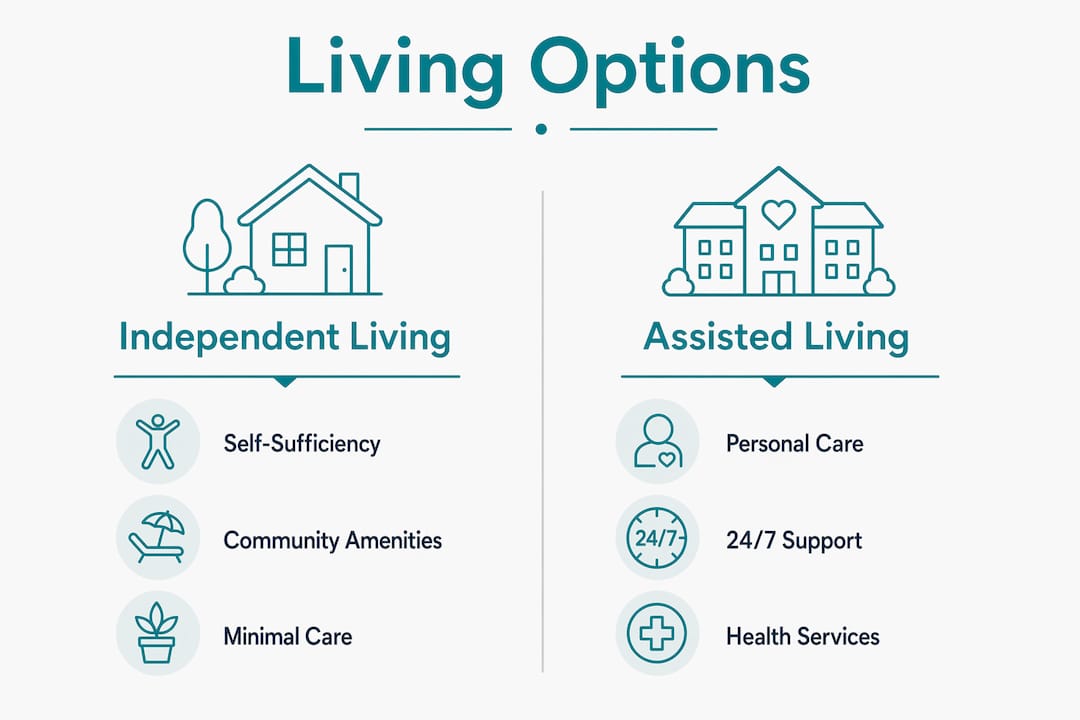
Independent living is for self-sufficient older adults who need little or no help with activities of daily living, things like bathing, dressing, and managing medications. Assisted living is designed for seniors who need regular help with those same tasks but do not require full nursing care. The core difference is not the setting. It is the level of personal support built into the model.
Here is a side-by-side look at the key differences:
| Feature | Independent Living | Assisted Living |
|---|---|---|
| Personal care (bathing, dressing) | Resident manages independently | Staff provides daily assistance |
| Medical oversight | Nurse onsite a few days per week | Licensed nurses available daily |
| Memory care | Not typically available | Often available on-site |
| Monthly cost | Around $3,000 | Typically $4,500 and above |
| Living space | Private apartment or cottage | Private or semi-private room |
| Social activities | Extensive community programming | Available but more limited |
A third option worth knowing is the Continuing Care Retirement Community, or CCRC. CCRCs provide a full care continuum on one campus, meaning you can start in independent living and transition to assisted living or skilled nursing care without relocating. For solo agers especially, this kind of built-in pathway removes a significant source of future uncertainty.
The most common misconception is that independent living provides similar daily assistance to assisted living. It does not. Residents in independent living handle personal care themselves. That distinction is not a flaw in the model. It is the point.
If you do not have a spouse, nearby adult children, or a strong local support network, independent living may offer benefits that go beyond convenience. Community staff, neighbors, transportation services, and organized activities can provide layers of connection and support that are harder to maintain while living completely alone.
Independent living is not a substitute for a personal support network, but for many solo agers it can become an important part of one.
The benefits of this model are real and worth naming clearly.
You set your own schedule, make your own choices, and live on your own terms.
Communities make it easy to meet people and build relationships. Isolation is one of the biggest health risks for older adults, and independent living addresses it directly.
No more worrying about a broken furnace or a lawn that needs mowing. That mental load lifts.
Independent living is generally the most affordable senior living option because it excludes the staffing costs tied to personal or medical care.
Emergency response systems and security staff provide a layer of protection without requiring you to give up privacy.
The challenges are equally worth naming honestly.
There is no 24/7 medical support. If your health changes significantly, independent living may no longer be the right fit, and transitioning can be stressful. Downsizing from a family home to a community apartment is emotionally and logistically demanding for many people. And managing your own activities of daily living completely means you need to be genuinely self-sufficient when you move in.
Learning to stay active and independent while aging takes intentional planning, not just good intentions. Building a strong support network before you need it makes all the difference.
If you are considering independent living, think about your health trajectory, not just your current state. Ask yourself honestly whether you expect your needs to remain stable or increase over the next five years. That answer should shape which community you choose and whether a CCRC model makes more sense for your situation.
Seniors qualify for independent living by being able to safely manage their activities of daily living with little or no assistance, and by meeting the community's minimum age requirement, typically 55 or 60 years old. Good overall health and the ability to live without daily personal care support are the baseline criteria.
Choosing the right community takes more than a quick tour. Here is a practical approach:
Do you want a quiet, smaller community or a large campus with extensive programming? Knowing what kind of social environment suits you narrows the field quickly.
Factor in the base monthly fee, likely add-ons, and any entrance fees. Regional costs vary widely, so compare communities in your target area specifically.
A weekday visit and a weekend visit give you very different impressions of the community's actual rhythm.
Clarify what on-site services are available versus what requires an outside provider, and understand exactly what happens if your care needs change.
Not the marketing team. Residents will tell you what the community is actually like to live in day to day.
Exploring independent living resources for seniors through trusted guides and checklists before you visit communities gives you sharper questions and better judgment when you are on the ground. And because planning for future care needs is essential, read our guide on why every solo ager needs a healthcare proxy before making any major decisions.
A tour tells you what a community looks like. These questions tell you what it's actually like to live there.
Independent living works best for seniors who are self-sufficient today and want a community lifestyle with built-in safety, social connection, and freedom from home maintenance.
| Point | Details |
|---|---|
| Core definition | Independent living is a lifestyle housing model, not a care model, for self-sufficient adults 60 and older. |
| What it includes | Amenities like housekeeping, dining, transportation, and security are standard; personal care is not. |
| Cost comparison | Monthly costs average around $3,000, making it the most affordable senior living option. |
| Key distinction | Assisted living provides daily personal care; independent living residents manage all ADLs themselves. |
| Choosing wisely | Ask about transition policies and care continuums, especially if you are a solo ager planning ahead. |
Most articles about independent living read like brochures. They list the amenities, mention the social activities, and leave out the harder questions. Here is what I actually think after spending years working with solo agers on these decisions.
Independent living is genuinely good for the right person at the right time. The social infrastructure alone can be life-changing for someone who has been quietly isolated in a family home that no longer fits their life. The relief of not managing maintenance, utilities, and home repairs is real. For many people, moving into an independent living community is the most empowering decision they make in their 60s or 70s.
But I have also seen people move in before they were ready, or choose a community based on the pool and the dining room without asking a single question about what happens when their health changes. That is where things get painful.
The most important thing you can do is treat this as a long-term planning decision, not a housing search. Ask about the CCRC option. Ask what the community does when a resident's needs exceed what independent living provides. Ask whether you can bring in outside supportive home services if you need them without violating your agreement.
Autonomy is worth protecting. So is having a real plan for when you need more support. Those two things are not in conflict. They belong together.
The goal is not simply to find a place to live. The goal is to create a living situation that supports the life you want five, ten, and even fifteen years from now.
— Mike
Agingsolo is built for people who are doing this without a built-in support system. Whether you are a solo ager figuring out your next housing move or a caregiver helping someone you love think through their options, the resources here are designed to give you clarity without the overwhelm.

Start with aging alone: what every solo ager needs to know, a grounded, practical resource covering housing decisions, safety planning, and building the support network you actually need. If you are focused on staying home, the aging in place guide walks through exactly how to make that work safely and sustainably. You do not have to figure this out alone. Agingsolo is here to help you think it through, step by step.
Whether you're exploring independent living communities or building a plan for aging solo, Agingsolo is here to help you think it through.