
TL;DR:
Growing old alone is a reality facing millions of Americans. Some never married. Others are widowed, divorced, or live far from family. Whatever the reason, aging without a built-in support system requires a different kind of planning.
Growing old alone is defined as aging without a spouse, partner, or nearby adult children to provide daily support, safety checks, or care coordination. This reality is more common than most people realize. About 26% of U.S. adults aged 65 and older lived alone in 2023, with women significantly more likely than men to be in that situation. The term "solo ager" has become the recognized way to describe this group. If you are one of them, the challenges are real. So are the solutions. This guide covers safety, social connection, finances, and daily routines so you can age with confidence and clarity.
Being old and alone does not mean being helpless or forgotten. It means you are managing your life without the informal safety net that many people take for granted. No one in the next room to notice if you fall. No adult child to drive you to appointments. No partner to split the bills or share the worry.
The term "solo ager" captures this reality precisely. It refers to adults aging without a spouse or children who can step in during a crisis. More than 22 million older Americans fit this description, and their numbers are growing. That scale matters because it means communities, services, and planning tools are increasingly being built with you in mind.
The challenges of old age alone fall into three broad categories: physical safety, emotional well-being, and financial security. Each one is manageable with the right approach. The key word is proactive. Waiting for a crisis to force your hand is the one strategy that consistently makes things harder.
Home is where most risks concentrate for elderly adults living alone. One in four Americans aged 65 and older falls each year, and the most dangerous spots are predictable: bathrooms, stairways, and poorly lit hallways. That predictability is actually good news. It means you can address the risks before they become emergencies.
Start with a room-by-room walkthrough. Look for loose rugs, dim lighting, and surfaces with nothing to hold onto. The bathroom is the single most dangerous room for older adults. A wet floor and nothing to grip is a fall waiting to happen.
Here are the modifications that make the biggest difference:
That last item matters more than people expect. Emergency contact jewelry and wearable alert systems give you a direct line to help without needing to reach a phone.
Pro Tip:
Do your home safety walkthrough at night. The hazards you find in low light are the ones most likely to cause a fall.
| Area | Key risk | Recommended fix |
|---|---|---|
| Bathroom | Slippery surfaces | Grab bars, non-slip mat |
| Stairway | No support rail | Install or reinforce handrail |
| Hallway | Poor lighting | Motion-sensor night lights |
| Kitchen | Reaching overhead | Reorganize items to counter height |
| Entryway | Loose rugs | Remove or secure with non-slip backing |
The National Institute on Aging recommends treating home safety as a systems problem, not a one-time fix. Schedule a walkthrough every six months. Your needs and your home both change over time.
Senior isolation issues are not just about feeling sad. States with more seniors living alone show higher rates of depression and fewer mental health professionals per 10,000 seniors. Loneliness is a health issue with measurable consequences, including increased risk of cognitive decline and cardiovascular disease.
The encouraging finding is that connection does not require being tech-savvy or mobile. The HEAL-HOA clinical trial found that telephone-delivered behavioral activation and mindfulness interventions significantly reduced loneliness at 12 months among older adults who were digitally excluded. A phone call, structured and consistent, can do real work.
"Loneliness can be mitigated without digital reliance. Structured phone-based support represents a scalable public health intervention for older adults living alone."
— JAMA Network Open, HEAL-HOA Trial
That finding reshapes how you think about building connection. You do not need a smartphone or a social media account. You need regular, meaningful contact with other people.
Here are practical ways to build that contact into your week:
The goal is not to fill every hour. It is to have at least two or three reliable points of human contact each week. That steady rhythm is what protects your mental health over time.
Building a personal support circle is one of the most effective ways to reduce isolation and strengthen your long-term independence. For more on creating meaningful connections, explore our guide to community groups for adults 50+.
Solo agers face a financial reality that couples do not. Solo retirees carry the full cost of housing, utilities, healthcare, and daily living without a second income to share the load. This is sometimes called the "singles tax," and it is not a small number. A single person needs roughly 70 to 80 percent of what a couple spends to maintain the same standard of living, but they carry 100 percent of the fixed costs.
Here is a practical sequence for getting your financial plan in order:
Pro Tip:
A fee-only financial planner charges a flat fee rather than earning commissions. That structure removes the conflict of interest and tends to produce advice that actually fits your situation.
| Financial factor | Couple | Solo ager |
|---|---|---|
| Fixed housing costs | Split between two | Carried by one |
| Social Security | Two benefit streams possible | One stream, timing is critical |
| Informal care | Often provided by partner | Must be planned and paid for |
| Legal documents | Shared decision-making | Requires designated proxies |
| Emergency fund | Two incomes as buffer | Single income, higher reserve needed |
The Eldercare Locator, a free national service, can connect you with local benefits counselors who help older adults understand what financial assistance programs they qualify for.
One of the biggest challenges of aging alone is decision-making during a medical emergency. If you become hospitalized or temporarily unable to communicate, someone may need to:
That is why every solo ager should have:
These documents do not take away your independence. They protect it by ensuring your wishes are followed when you cannot speak for yourself. Learn more about setting up your healthcare proxy.
Routines are the quiet infrastructure of safe solo aging. When no one else is monitoring your health or noticing small changes, your own habits become the early warning system. Integrating medication management and regular check-ins into your daily schedule compensates for the informal monitoring that family members would otherwise provide.
These habits are worth building now, before you need them:
The National Institute on Aging emphasizes that building these relationships and routines before a crisis is what makes aging in place sustainable. Waiting until you need help to find it is the most common mistake solo agers make.
Growing old alone is manageable with proactive planning across safety, social connection, finances, and daily routines, and the earlier you start, the more options you keep.
| Point | Details |
|---|---|
| Home safety is predictable | Address bathrooms, stairs, and lighting before a fall occurs, not after. |
| Connection does not require technology | Structured phone check-ins reduce loneliness as effectively as in-person contact. |
| Solo agers carry full financial costs | Delay Social Security to 70 and build a care budget that accounts for no backup income. |
| Daily routines replace informal monitoring | Medication reminders and check-in contacts catch health changes early. |
| Legal documents are non-negotiable | A power of attorney and healthcare directive protect your wishes when you cannot speak for yourself. |
I have spent years working with solo agers, and the pattern I see most often is this: the people who struggle are not the ones who live alone. They are the ones who waited too long to plan.
One thing I have learned from working with solo agers is that independence is rarely lost overnight. More often, it erodes gradually when small challenges go unaddressed. The people who remain independent the longest are usually the ones who prepare while life is still going well.
The fear of aging alone is real. So is the freedom that comes from knowing you have prepared well. The people who age well alone share one trait: they treated their independence as something worth protecting, not something to be embarrassed about. They made a plan before they needed one.
The research backs this up. The HEAL-HOA trial showed that phone-based support reduced loneliness in older adults who had no digital access at all. That tells me the barrier to connection is almost never technology or geography. It is the decision to reach out.
What I encourage every solo ager to do is treat their support network like a muscle. Use it now, while you do not desperately need it. Call the friend. Join the program. Talk to the financial planner. The people who build those habits early are the ones who stay in their homes longer, feel better, and face crises with a real safety net already in place.
Aging solo is not a lesser path. For many people, it is an intentional and fulfilling way to live. It just requires more intentional design than the alternatives.
— Mike
Agingsolo is built specifically for people who are growing older without a built-in support system. Whether you are thinking through home safety, financial planning, or how to build a support circle from scratch, the guides and tools on the site are designed for your situation, not a generic retirement audience.

The solo ager's safety guide walks you through home modifications, emergency planning, and daily routines in plain language. The health and emergency planning section helps you build a written plan before you need it. And if you are thinking about the longer road ahead, the life care planning guide covers legal documents, care coordination, and how to stay in control of your own decisions. Start wherever feels most urgent. Every step you take now is one less crisis to manage later.
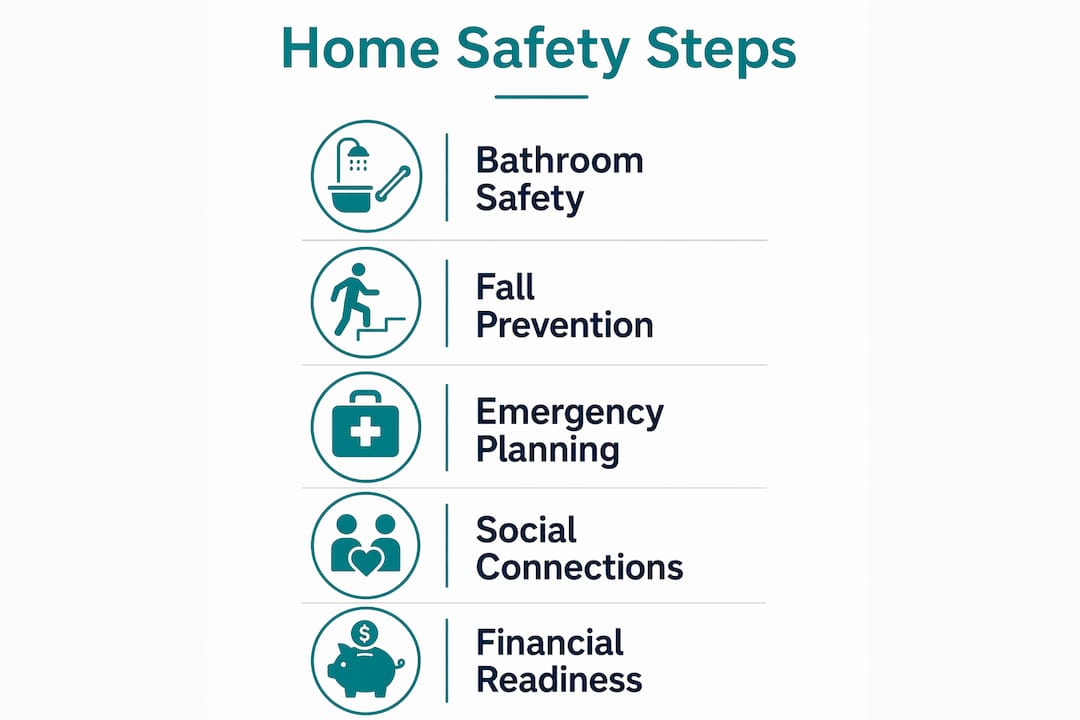
Growing old alone does not mean facing the future alone. A simple first step is creating a written plan for:
Emergency contacts
Home safety improvements
Healthcare decision-makers
Financial documents
Social connections
Action checklist
The sooner you begin, the more options and independence you preserve.
Explore the Solo Readiness ChecklistYou do not need children to build a strong support system. Many solo agers rely on friends, neighbors, faith communities, volunteer organizations, and professional advisors. The key is developing those relationships before a crisis occurs.
About 26% of adults aged 65 and older lived alone in 2023, with 31% of older women and 19% of older men in that situation.
Falls are the leading physical risk, with one in four adults over 65 falling each year. Social isolation and untreated depression are the most significant mental health risks for seniors living alone.
Yes. The HEAL-HOA trial found that telephone-based interventions significantly reduced loneliness in older adults with no digital access, proving that structured phone contact is an effective and scalable solution.
The earlier the better, but the most time-sensitive decision is Social Security timing. Delaying your claim to age 70 produces the highest monthly benefit, which is especially important when there is no spousal income to fall back on.
A solo ager is an older adult who is aging without a spouse, partner, or nearby adult children to provide informal support or care. The term is widely used by planners, researchers, and organizations like AARP to describe this growing population.