

Living alone after 50 can offer freedom, peace, and independence. But it can also create long stretches of quiet that feel heavier than expected. For many people aging on their own, a pet becomes more than companionship. It becomes structure, comfort, routine, and connection.
The numbers support this too. 70% of pet owners aged 50 and older say their pets help them feel more connected, less stressed, and more active. Yet many solo agers still hesitate, worried about cost, care demands, or what happens in an emergency.
This guide walks you through the real benefits, the honest challenges, and how to decide if a pet fits your life right now.
| Point | Details |
|---|---|
| Health benefits | Pet ownership improves physical activity, reduces stress, enhances social connections, and slows cognitive decline. |
| Financial considerations | Pet care costs can strain budgets, so solo agers must carefully assess affordability before adopting. |
| Choosing the right pet | Different pets offer unique benefits; matching pet choice to lifestyle maximizes rewards and minimizes challenges. |
| Alternatives exist | Robotic pets provide companionship and mental health benefits when live pet ownership is not feasible. |
| Plan responsibly | Successful pet ownership includes preparing for care during emergencies and gradual pet introductions. |
The benefits of pets for singles living alone are not just about having company in the house. They run deeper than that. Pets give you a reason to get up, a routine to anchor the day, and a living presence that responds to you. That matters more than most people realize.
One of the clearest impacts of pets on solo living is how they pull you outward. A dog requires walks, and walks lead to conversations with neighbors, other dog owners, and people in the park. Even a cat or a small bird can spark a conversation with a visitor or a home health aide.
Among pet owners aged 50 and older, the numbers look like this:
Caring for another living thing shifts your attention outward. On hard days, a cat on your lap or a dog pressing against your leg is a quiet anchor. It is not therapy, but it is real. The sense of being needed by a creature who depends entirely on you can interrupt patterns of rumination and isolation. If you're recognizing hidden loneliness in your own life, a pet might be part of the answer—alongside building your broader support circle.
For some people, the hardest part of pet ownership is knowing pets do not live forever. Loss can feel especially heavy when living alone. But many older adults still describe the years of companionship, routine, comfort, and connection as deeply worth it.
Dog owners walk more. That is not a guess. The advantages of having a pet extend to physical habits that are difficult to build through willpower alone but easy to maintain when a dog is waiting at the door. Regular walking supports staying active and independent as you age, which is one of the most important things you can do for your long-term health.

Your body actually responds differently when you interact with a pet. Understanding this helps explain why so many people find pets genuinely helpful rather than just nice-to-have.
Spending just 15 minutes with a friendly dog can lower your heart rate and cortisol, the primary stress hormone. Cat owners see a particularly interesting pattern: cat ownership is linked to roughly 30% lower heart attack risk. That rivals many lifestyle interventions doctors commonly recommend.
Pet ownership appears to slow cognitive decline, especially in older women who have recently experienced social loss such as widowhood or an empty nest. Verbal memory and executive function (the ability to plan, organize, and make decisions) both tend to benefit. Pet owners also average 30% fewer doctor visits than non-owners.
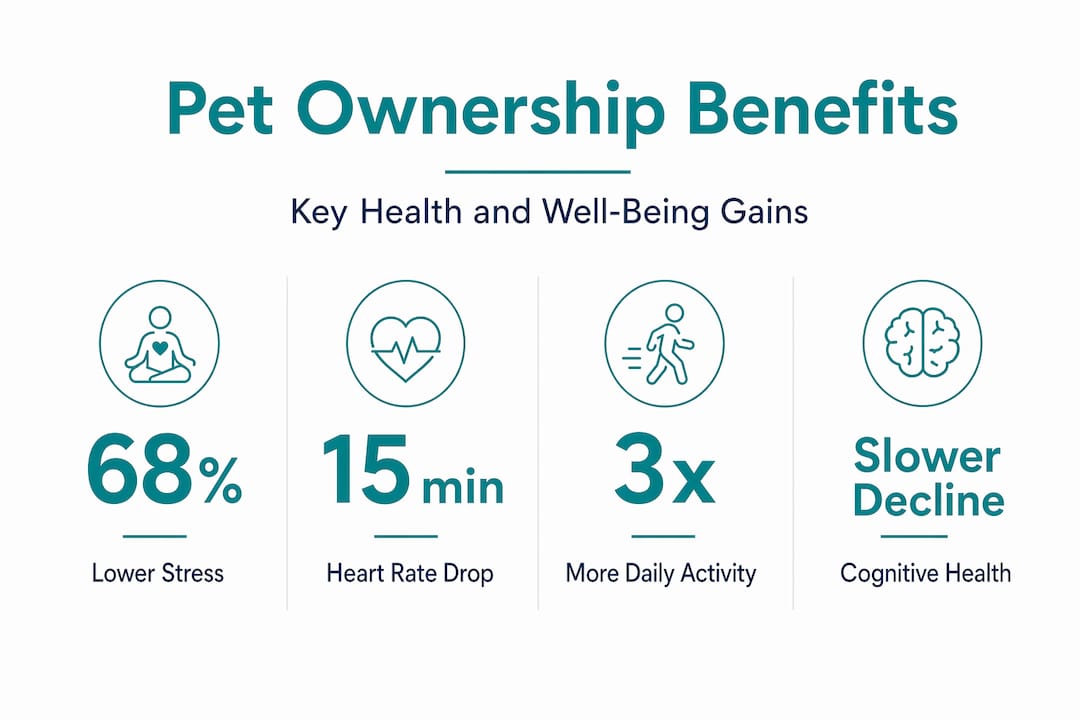
| Health Benefit | What the Evidence Shows |
|---|---|
| Stress reduction | 15 min with a dog lowers cortisol and heart rate |
| Heart health | Cat ownership linked to 30% lower heart attack risk |
| Cognitive decline | Slower verbal memory loss in pet-owning older adults |
| Doctor visits | Pet owners average 30% fewer visits |
| Physical activity | 44% of pet owners 50+ report more movement |
| Sense of purpose | 87% of pet owners 50+ say pets give them purpose |
Pro Tip:
If you live alone safely after 50 and are thinking about pet ownership, start with a low-energy dog breed or an adult cat from a shelter. Puppies and kittens are wonderful but demanding. An adult animal often slots into a quieter household far more smoothly, and you can assess their temperament before bringing them home.
The impact of pets on solo living is genuinely positive for many people. But honesty matters here. Pet ownership is a commitment, and it comes with real challenges that are worth naming directly.
31% of pet owners aged 50 and older say that pet care puts a strain on their budget. Monthly costs typically run between $50 and $150 for food, supplies, and routine care. Emergency vet bills can reach into the thousands without warning. Pet insurance can help, but it adds to monthly costs.
Veterinary care has become significantly more expensive in recent years, so realistic budgeting matters before bringing a pet home.
If your mobility is limited or you are managing a health condition, some pets will suit you better than others. Large dogs that need vigorous exercise may not be the right fit. A fall caused by a dog pulling on a leash is a real risk for some solo agers. Be honest with yourself about what you can manage safely and consistently.
Pro Tip:
Check your community for low-cost vet clinics, pet food banks, or senior pet adoption programs. Many shelters offer reduced adoption fees for adults over 60, and some communities have volunteer networks that help seniors with dog walking on difficult days.
Not everyone can care for a live animal. That is a real situation, not a failure. Health conditions, housing restrictions, allergies, or tight budgets can all make traditional pet ownership genuinely impractical. But for people unable to care for a live animal full-time, robotic companion pets can still provide comfort, routine, and emotional reassurance.
Robotic and AI-based companion pets are a growing option for older adults, particularly those in assisted living or memory care settings. They are also worth considering for solo agers at home who want connection without the full weight of animal care.
"Robotic pets won't replace the bond you build with a living animal. But for someone in a memory care facility or dealing with severe mobility limits, a responsive, soft robotic companion can meaningfully reduce anxiety and improve daily mood."
— Summarized from published research on AI companions for older adults
This is where the living alone pet guide gets personal. The best pet for you is the one that fits your actual life, not the one that sounds appealing in theory. And remember: older pets are often calmer, already house-trained, and a better fit for quieter lifestyles than puppies or kittens.
| Pet Type | Best For | Key Benefit | Main Consideration |
|---|---|---|---|
| Dog | Active solo agers | Social connection, daily walks | Time, cost, mobility needs |
| Cat | Low-energy or smaller homes | Calm presence, heart health | Independence, less interaction |
| Fish or aquarium | Minimal care needed | Lowers blood pressure, calming effect | Limited bonding |
| Small bird | Social, vocal company | Stimulation, routine | Noise, cage cleaning |
| Robotic pet | Health or housing barriers | Anxiety reduction, mood | No live bond |
Pro Tip:
Think about your five-year picture, not just today. A high-energy dog may fit your life perfectly right now. But solo aging well-being planning means choosing a pet whose care you can manage even if your circumstances shift. A calmer breed or an adult cat often ages alongside you more gracefully.
Here is an honest take you will not often hear: pet ownership is not a guaranteed health boost for every solo ager. The research is strong, but it carries a nuance that gets lost in the enthusiastic headlines.
Many studies comparing pet owners to non-owners are complicated by selection bias. In plain terms: healthier, more active, more socially engaged people are simply more likely to get pets in the first place. The pet may not be creating the health benefits so much as following someone who already has them.
More importantly, a pet that becomes a burden can actually create stress that chips away at the very benefits you were hoping for. An animal you cannot afford to care for properly, or one whose needs exceed your physical capacity, can become a source of guilt and anxiety rather than comfort. That matters.
What this means in practice is that the decision should be individualized and honest. The advantages of having a pet are real and meaningful for the right person in the right situation. But the goal is not to own a pet. The goal is to live well alone with intention.
The Untapped Opportunity
Solo agers who cannot commit to full pet ownership can still get regular animal interaction through shelter volunteering, pet-sitting for neighbors, or participating in therapy animal visits. These options deliver many of the same emotional benefits, with none of the ongoing financial or care burden. It is worth exploring those paths with the same openness you bring to ownership.
Making a thoughtful decision about pet ownership is easier when you have the right tools and a clear picture of your overall aging plan.
At Aging Solo, we offer practical guides built specifically for people navigating life without a built-in support system. Whether you are weighing the benefits of pets for singles or thinking through your broader independence plan, our resources are designed to give you clarity, not just information.
A Final Thought
A pet cannot solve every challenge that comes with aging alone. But companionship, routine, movement, and connection matter more than many people realize. For some older adults, the right pet becomes more than company. It becomes part of what helps a house continue feeling like home.