
TL;DR
Living alone emergency planning involves preparing for crises like power outages and natural disasters to maintain safety and independence. It emphasizes creating tailored supply kits, medical documentation, and communication routines that account for the absence of immediate help. Regularly reviewing and updating this plan ensures confidence and effective risk management for solo adults over 50.
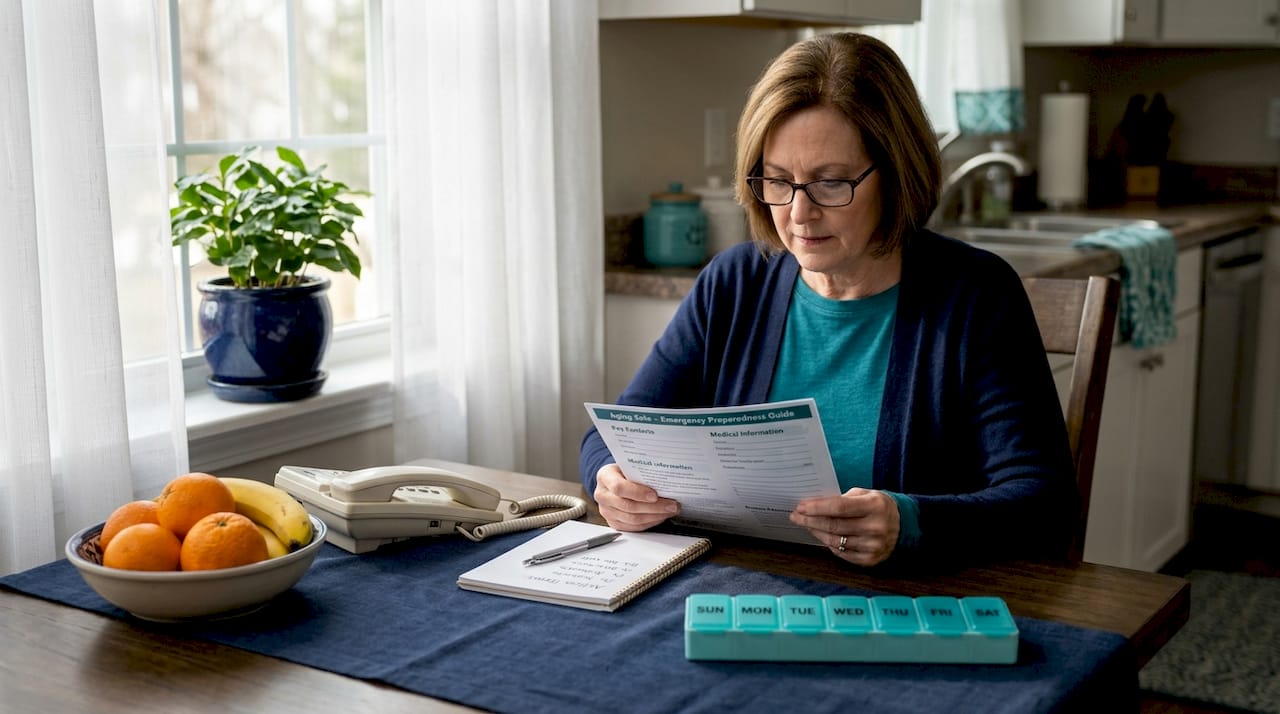
Most emergencies do not begin as disasters. They begin as ordinary moments. A fall in the bathroom. A sudden illness. A power outage during a summer storm. When you live alone, those moments can become more complicated simply because there is no one else in the house to notice something is wrong.
Living alone emergency planning is the practice of preparing, in advance, for medical crises, natural disasters, power outages, and other unexpected events that could leave you without immediate help. For adults over 50 living solo, this kind of preparation is not optional. It is the foundation of staying independent, staying safe, and staying in control of your own life.
The good news? You do not need a partner or nearby family to be genuinely well-prepared. You need a plan, a few reliable tools, and the habit of keeping both current.
Emergency preparedness for solo living is the recognized term professionals use for this practice. It covers everything from what you keep in a supply kit to how you communicate with responders when you cannot speak. For adults aging alone, the stakes are higher because there is no one in the next room to call 911 or hand your medication list to a paramedic. That gap is exactly what a good plan closes.
The core of any solid emergency plan for single adults rests on four pillars: supplies, medical documentation, communication, and evacuation. Each one matters on its own. Together, they create a real safety net that holds even when things go sideways fast.
Start with your emergency supply kit. Tailor it to your specific needs, not a generic checklist. That means:
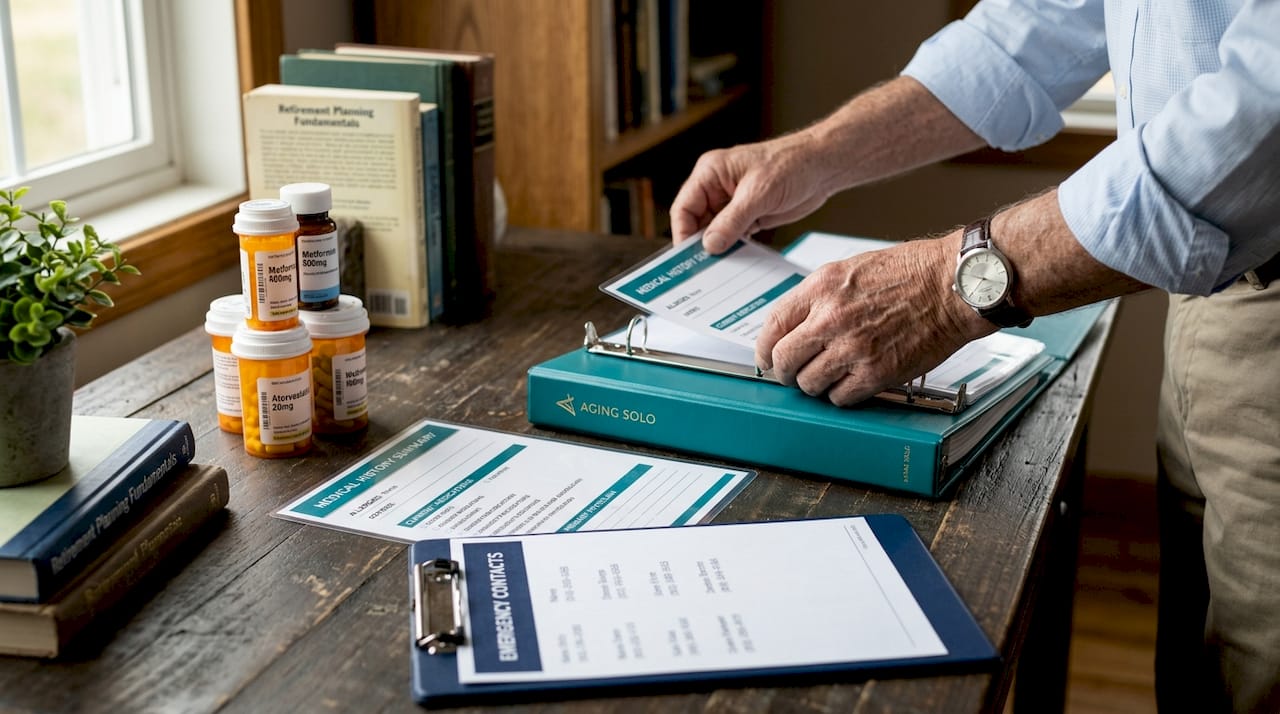
Next, build your medical information packet. A laminated one-page medical history placed on your refrigerator or inside your emergency kit gives responders everything they need, even if you cannot speak. Include your medication names and dosages, known allergies, your doctor's contact information, your insurance details, and your advance directives. Practitioners consistently note that the hardest part of an emergency is providing accurate medication information to responders when alone or incapacitated. A laminated card solves that problem before it starts.
Pro Tip
Place a duplicate medical info card in your wallet and a third copy in your car's glove compartment. Responders check all three locations.
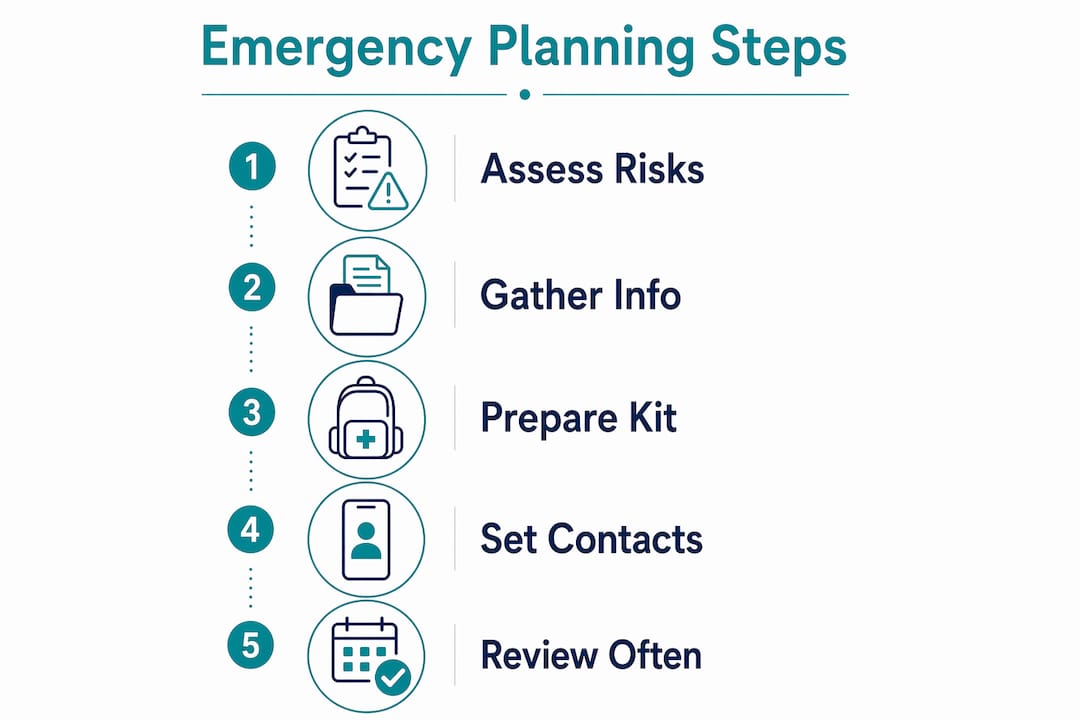
Designate at least two emergency contacts, and make sure both know they are on your list. Set up a simple check-in routine with one of them. A daily text or call takes 30 seconds and creates a reliable early-warning system if something goes wrong.
How To Stay Safe When Living Alone After 70
Power outages lasting 8+ hours increase emergency hospitalization risk for cardiovascular and respiratory issues among Medicare beneficiaries. The national average outage in 2024 ran 11 hours. That means a single overnight outage can become a genuine medical crisis if you use a CPAP machine, oxygen concentrator, or power wheelchair.
Here is how to prepare before an outage happens, not during one:
"Emergency preparedness must be seen as pre-planning, with backup power discussed before an incident occurs to avoid improvisation under stress." — Harvard Health
Extreme temperatures during outages pose serious health risks for older adults. If your home loses heat or cooling, identify a nearby public library, community center, or senior center in advance that you can go to. Knowing that location before you need it is the difference between a plan and a wish.
Keep a written list of important phone numbers as well. During extended outages, cell phones can lose power, internet service may become unreliable, and stored contact lists may not be accessible. A printed copy remains available no matter what technology fails.
The right communication habits turn a solo living situation from a vulnerability into a managed risk. Daily check-in routines with trusted contacts are one of the simplest and most effective tools available. A simple text or call protocol improves safety monitoring and provides social connection at the same time. If you miss your check-in, your contact knows to act.
For many solo agers, building a reliable support circle is one of the most important parts of emergency preparedness. Learn how to build your support circle and make sure you have the right people in place before an emergency occurs.
Beyond daily check-ins, consider these living alone safety tips for communication:
Pro Tip
Set a recurring alarm on your phone labeled "Check-in time." It takes the mental load off remembering and makes the habit stick.
Whenever possible, choose emergency contacts who live in different geographic areas. A regional weather event that affects one contact may not affect another. This is particularly valuable if you live in a hurricane-prone state or an area that experiences seasonal flooding.
Consider also wearing emergency contact jewelry that displays your name, a contact number, and key medical conditions. It works even when your phone is out of reach and your wallet is in another room.
No two solo agers face the same risks. Your emergency plan for single adults should reflect your specific health conditions, your home's location, and how you actually move through your day. A person managing diabetes in a rural area faces different challenges than someone with limited mobility in a high-rise apartment.
Use this table to assess your personal risk factors and match them to preparation steps:
| Risk factor | Preparation step |
|---|---|
| Chronic condition (diabetes, heart disease) | Stock 30-day medication supply; include condition-specific supplies in kit |
| Limited mobility | Pre-arrange transportation for evacuation; practice exit routes |
| Rural or isolated location | Maintain longer supply reserves; register with county emergency services |
| Pet ownership | Build a pet emergency plan with food, carrier, and vet records |
| Cognitive changes | Keep plan simple and laminated; share full details with a trusted contact |
Home safety modifications also reduce the chance of an emergency happening in the first place. Grab bars in the bathroom, non-slip mats, and good lighting on stairs are low-cost changes with real impact. Review your home with fresh eyes, or ask a trusted friend to walk through it with you.
Emergency planning works best when it is part of a broader approach to independent living. Learn more about maintaining your independence while aging at home.
Reviewing and practicing your emergency plan every six months improves preparedness and reduces the anxiety that comes with uncertainty. Update your contact list, check your supply expiration dates, and do a short mental walkthrough of your evacuation route. It takes less than an hour and keeps your plan from going stale.
A solid emergency plan for solo adults over 50 requires medical documentation, backup power, reliable communication habits, and a plan reviewed twice a year.
| Point | Details |
|---|---|
| Medical info packet | Keep a laminated one-page summary on your fridge and in your emergency kit. |
| Backup power planning | Arrange 48-hour backup power for medical devices before any outage occurs. |
| Daily check-in habit | A simple daily text to a trusted contact creates an early-warning system. |
| Wearable alert device | Modern medical alert systems with fall detection reduce emergency response time for solo adults. |
| Plan review schedule | Revisit and update your full emergency plan every six months without exception. |
I have talked with a lot of solo agers who put off emergency planning because it feels like admitting something. Like making a plan means expecting the worst. I understand that feeling. But here is what I have actually seen: the people who plan ahead are calmer, more confident, and far more independent than those who avoid the subject.
The irony is that emergency planning often creates more freedom, not less. When you know you have prepared for common risks, you spend less time worrying about them and more time enjoying your independence.
The practical truth is that a good plan does not take weeks to build. Most people can assemble a solid emergency kit, write up their medical info card, and set up a check-in routine in a single afternoon. The hard part is starting. Once you have done it, the anxiety drops noticeably. You stop wondering "what if" because you already have an answer.
What I see most often overlooked is the power outage piece. People think about food and water but forget that a CPAP machine going dark at 2 a.m. is a real crisis. Getting on your utility provider's medical registry and having a charged backup power station changes that outcome entirely. It is one of the highest-return steps you can take, and it costs less than most people expect.
If you are living alone and aging at home, the goal is not to eliminate risk. The goal is to reduce it to a level you can manage with confidence. That is what a real plan does.
— Mike
Aging Solo is built specifically for adults who are growing older without a built-in support system nearby. The guides, checklists, and tools on the site address the real challenges of solo aging, including emergency readiness, housing decisions, and building a support network that actually works.
If you are ready to move from thinking about emergency planning to actually doing it, the health and emergency planning section of Aging Solo gives you a clear, step-by-step path forward. You can also explore the full solo ager resource hub to understand the bigger picture of aging independently with confidence.
You do not have to figure this out alone. Aging Solo exists to make sure you do not have to.
Explore our complete Health & Emergency Planning resources designed specifically for solo agers.